Anaestheasier's Who's Who of Anaesthesia
Anaesthesia is chock full of famous names.
- You're using a Macintosh blade to intubate your Mallampati 2 patient while your ODP performs the Sellick manoeuvre
- You slide the Ryle's tube in with Magill's forceps
- You put in a central line using the Seldinger technique
- Then you extubate using a Guedel airway as a bite block
Some were anaesthetists, others were dentists, physiologists, surgeons and chemists.
Some fundamentally changed our understanding of medicine, while others solved a problem with a niche bit of kit.
And one was a donkey.
Here we present (in roughly chronological order of their contributions to our great specialty) the Anaestheasier Who's Who of Anaesthesia.
We hope you enjoy, and let us know if we've missed anyone out!
Joseph Priestley
- 1772
- The OG
- English chemist and clergyman who first isolated nitrous oxide
Nobody had a clue what to do with it, mind.
Humphry Davy
- 1800
- British chemist and inventor
- Messed around with nitrous oxide in the name of 'science'
- Noticed it had analgesic properties
- Suggested it might be useful during surgery
- Got ignored for several decades before the medical community decided this was a positively splendid idea
Friedrich Sertürner
- 1804
- German pharmacist who first isolated morphine from opium
- This allowed us to administer scientifically accurate analgesia, rather than highly variable plant extracts
Charles Waterton
- 1810s
- British explorer, naturalist and general madman who brought wourali to Britain from his travels in South America
- He helped demonstrate that paralysis with curare could be survived if you breathed for the victim until it wore off
Read our whole post here
Benjamin Brodie
- 1810s
- British surgeon and physiologist who experimented with curare and helped establish the foundations of neuromuscular blockade in surgery
Wouralia
- 1814
- A donkey
- Was paralysed on stage by curare (called wourali), tracheostomised and ventilated for several hours
- Survived the ordeal and lived many more happy years in the countryside
The only donkey to get her own obituary in the local paper.
Read more here.
Crawford Williamson Long
- 1842
- American physician who used ether for surgical anaesthesia for several years before the iconic ether dome demonstration by Morton
- First used ether surgically on 30th March 1842 but unfortunately he didn't publish his findings until 1849 as he wanted to accumulate more evidence of ether's effects first
- In our opinion he's the quiet, unassuming hero of ether anaesthesia
Read more here.
Horace Wells
- 1844
- American dentist who realised that nitrous oxide could make dental extractions much more comfortable
- He undertook a public demonstration in Boston during which the patient (a high BMI drinker) screamed out during the procedure
- Wells was unfairly mocked for his 'failure' and went on to live a tragic life of addiction
Ironically Wells' demonstration was actually a perfect example of conscious sedation, as the patient did not recall the procedure and did not remember being in any pain (much like the yelps one might hear during a cardioversion list).
Claude Bernard
- 1844
- French physiologist
- More frog experiments to demonstrate that not only was the neuromuscular junction the site of action, but animals remain conscious and sensate while paralysed with curare
The true horror of death by curare became clear.
William T.G. Morton
- 16th October 1846
- Ether Day
- Morton publicly demonstrated ether anaesthesia at Massachusetts General Hospital
- This allowed surgeon John Collins Warren to painlessly remove a tumour from the neck of unconscious young Gilbert Abbott
Surgery would never be the same again.
Read more here.
Oliver Wendell Holmes Senior
- 1846
- American physician and writer who coined the terms anaesthesia and anaesthetic to describe this wondrous new state produced by ether
And clearly it caught on.
James Young Simpson
- 1847
- Scottish obstetrician who publicly demonstrated chloroform anaesthesia
- Particularly used for childbirth and was subsequently used for Queen Victoria's labour, which accelerated the social acceptance of the idea that maybe pain relief in labour isn't such a bad idea after all
Read more here.
John Snow
- 1840s
- One of the first genuinely scientific anaesthetists
- Studied anaesthetic concentration and depth
- Designed inhalers to control anaesthetic administration
- Chloroformed the Queen
Legend.
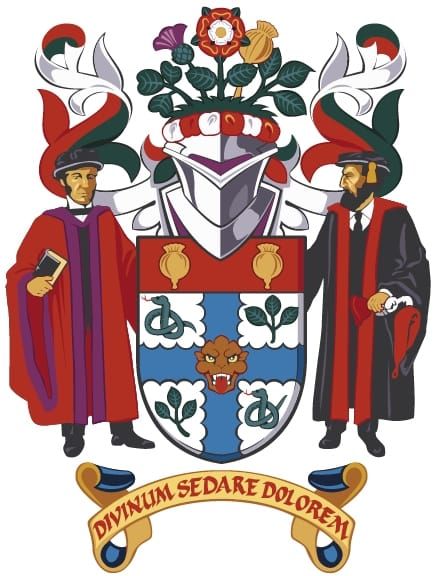
On the left of the RCoA Coat of Arms.
Joseph Clover
- 1860s
- Developed the Clover ether inhaler
- Worked to make administration of volatiles safer and more reliable
On the right of the RCoA Coat of Arms.
Sydney Ringer
- 1880s
- British physician and physiologist who messed about with frogs' hearts to produce his namesake salty water solution
- We have his work to thank for our litres of PlasmaLyte and Hartmann's today
Karl Koller
- 1884
- Austrian ophthalmologist who gave frogs cocaine
- Well, he dripped it into their eyes and showed that they weren't particularly bothered when he subsequently prodded them
- Paved the way for local anaesthesia
Read more here.
James Leonard Corning
- 1885
- American neurologist
- Injected cocaine between the spinous processes of his human patient (victim?) to the measured depth of the transverse processes and demonstrated the beginnings of neuraxial anaesthesia
- Might have done a spinal, might have been epidural, was awesome either way
Read more here.
Heinrich Quincke
- 1891
- German physician who developed the lumbar puncture
- The Quincke needle is one of the most famous cutting bevel needles and yes, you need to know about it for the exams
Read more here.
August Bier
- 1898
- German surgeon credited with performing the first successful spinal anaesthetic for surgery
- Famously experimented with his assistant August Hildebrandt
- Also caused the world's first post dural puncture headache based on the description of the 'hangover' they had the next morning
- Then in 1908 developed the famous Bier's block for intravenous regional anaesthesia
Read more here.
Sidney Yankauer
- 1907
- American ENT surgeon who developed the ubiquitous rigid suction catheter that we faithfully tuck under the pillow to this day
Frederic Hewitt
- 1908
- Developed the first oropharyngeal airway
Ivan Magill
- 1920s
- Worked with Stanley Rowbotham on soldiers with facial injuries acquired during the First World War
- Magill helped develop the concept of endotracheal intubation
- Forceps
- Circuit
- Tubes
- Laryngoscope blade
He wins the prize for 'most stuff with his name on it'.
Read more here.
Stanley Rowbotham
- 1920s
- British anaesthetist working with Magill at Harold Gillies' plastic surgery unit
- Revolutionised endotracheal intubation as a solution to the issue of anaesthetising patients with extremely difficult facial anatomy
- Introduced cyclopropane to the UK
- Revolutionised anaesthesia for thyroid surgery
Read more about him here.
Ralph Milton Waters
- 1927
- American anaesthesiologist and first ever Professor of Anaesthesiology
- One of the OGs of modern academic anaesthesia
- Worked with Guedel on cuffed endotracheal tubes
- Produced the Waters Canister CO2 absorption system
- Essentially trained an entire generation of anaesthetists and helped build it into the respected specialty that it is today
- So highly respected that those trained by him directly, or trained by those he had trained, refer to themselves as the Aqualumni
Read more about him here.
John Alfred Ryle
- 1920s
- British physician who developed the anaesthetist's frenemy - the Ryle's tube
John Silas Lundy
- 1920s
- American anaesthesiologist who introduced the concept of 'balanced' anaesthesia, where different drugs are used to achieve narcosis, analgesia and immobility rather than just hammering the patient with more of one vapour
Arthur Guedel
- 1933
- American anaesthesiologist responsible for the Guedel airway and his namesake stages and planes of ether anaesthesia (1937)
- Also designed and produced his own cuffed endotracheal tubes
- Then proved they worked by anaesthetising his dog (called Airway) and submerging it for long enough to prove the cuff's seal worked
Read more here.
Achille Dogliotti
- 1930s
- Italian surgeon who first described the loss of resistance technique for identifying the epidural space
- It's him we have to thank for that heavenly sensation of feeling the plunger suddenly give way
Ernest Volwiler and Donalee Tabern
- 1936
- American chemists responsible for developing thiopental
- Revolutionised the process of inducing anaesthesia safely, quickly and with much less nausea on the way back up
Robert Macintosh
- 1937
- New Zealand-born anaesthetist
- Pointed out to William Morris, Lord Nuffield, who was about to fund new medical chairs at Oxford University, that he should probably include anaesthesia
- Hence he became the first Nuffield Professor of Anaesthetics at Oxford in 1937
- Spent his career making anaesthesia simpler and safer, developing portable ether vapourisers for the military and solving ventilation problems in planes and submarines among many other accolades
- 1943 developed (with technician Richard Salt) the most famous laryngoscope blade of all time which remains essentially unchanged eighty years later
Thomas Philip Ayre
- 1937
- British anaesthetist who developed the Ayre's T-Piece
- This was a startlingly simple way of efficiently delivering a safe fresh gas flow to a spontaneously breathing patient (mainly aimed at paeds) with very little resistance
- This was later modified by adding a reservoir tube to become the Mapleson E breathing system
Ronald Miller
- 1941
- American anaesthesiologist who introduced the famed straight blade used commonly for paediatric intubations
Harold Griffith and Enid Johnson
- 1942
- Canadian anaesthesiologists who used curare during general anaesthesia to provide surgical muscle relaxation on 23rd January 1942
- Unconsciousness and immobility were finally separable processes that could be managed independently and didn't rely on just getting the patient dangerously deep
Read more here.
Cecil Gray
- 1940s and 1950s
- British anaesthetist who helped develop the Liverpool technique of balanced anaesthesia
- Narcosis
- Analgesia
- Muscle relaxation
Edward Tuohy
- 1944
- American anaesthesiologist who described continuous spinal anaesthesia using a ureteric catheter passed through a needle into the subarachnoid space
- Then in 1945 developed his eponymous Tuohy needle that facilitated 'cephalad advancement of the catheter'
- Technically the shape of the needle had already been patented by dentist Ralph Huber, but Tuohy was responsible for introducing it to neuraxial anaesthesia
Manuel Martínez Curbelo
- 1947
- Cuban anaesthesiologist who first described the use of a Tuohy needle to introduce a catheter into the epidural space
- The labour epidural was born
Philip Bromage
- 1950s
- A legend of epidural anaesthesia
- The Bromage score remains the go-to way of describing lower-limb motor blockade with epidural anaesthesia
Sven-Ivar Seldinger
- 1953
- Swedish radiologist
- Needle, wire, needle out, catheter over wire
- What a dude
Virginia Apgar
- 1953
- American anaesthesiologist who devised a rapid method of assessing newborn babies after delivery
Gordon Jackson-Rees
- 1950s
- British paediatric anaesthetist
- Modified Ayre's T-piece by adding an open-ended reservoir bag, producing the Mapleson F circuit and transforming paediatric anaesthesia in Liverpool
Read more here.
William Wellesley Mapleson
- 1954
- Welsh physicist who classified breathing systems into the famed A, B, C, D and E you need to know for the exams
- F was added later by Jackson Rees
Read more here.
John Severinghaus
- 1950s-1960s
- American anaesthesiologist and physiologist
- Developed the Severinghaus carbon dioxide electrode and paved the way for the arterial blood gas monitoring we so take for granted every day
Edmond Eger II
- 1960s
- The literal MAC daddy
- American anaesthesiologist who established the concept of minimum alveolar concentration
- He's the reason you can sleep at night safe in the knowledge your patient was asleep earlier that day
Roger Manley
- 1961
- Designed and built the first reliable pneumatic ventilator
- As a senior house officer
Brian Sellick
- 1961
- British anaesthetist who described the concept of cricoid pressure to prevent regurgitation during induction
- We've expressed our opinions on the matter here
Frank Robertshaw
- 1960s
- British anaesthetist from Manchester who developed the Robertshaw double-lumen tube
- This helped make lung isolation and one lung ventilation reliable for thoracic surgery
Jeremy Swan and William Ganz
- 1970
- Developed the balloon-tipped pulmonary artery catheter
- Soon became the gold standard for right-heart and pulmonary artery haemodynamic monitoring
Seshagiri Mallampati
- 1980s
- Indian anaesthesiologist who developed one of the most widely used components of airway assessment in modern anaesthesia
- Open your mouth, stick your tongue out, easy
Robert Cormack & John Lehane
- 1984
- British anaesthetists who classified the laryngoscopic view
- Every time you say what 'grade' of intubation it was, it's these two you have to thank
Archie Brain
- 1980s
- British anaesthetist who created his own entirely new category of airway device - the laryngeal mask airway
So who are the biggest hitters?
Well you're getting into the semantics of opinion here, but if you ask us...
- Priestley discovered nitrous
- Davy realised it relieved pain
- Long, Morton and Wells showed you could do surgery without the agony
- Snow and Clover showed us we could control our vapours safely
- Eger told us how much to give
- Koller, Corning, Quincke and Bier showed us the wonders of loco-regional anaesthesia
- Griffith and Johnson separated hypnosis from immobility
- Magill, Macintosh and Rowbotham helped us secure the airway
- Guedel and Waters fine tuned airway management
- Brain made it fast and efficient
It's a team sport after all.
Who did we miss?
What names would you want to see on our wall of fame? Get in touch and let us know.
References and Further Reading
For this post, AI LLMs were used to help find relevant articles and to fact check my writing, however every word on this page was typed by me.
- Royal College of Anaesthetists. The History of Anaesthesia.
- Wood Library-Museum of Anesthesiology. History of Anesthesia.
- Bateman BT, Alston TA. Commonly used eponyms in anesthesia. Journal of Clinical Anesthesia. 2009;21(1):67–71.
- Maltby JR. Notable Names in Anaesthesia. Royal Society of Medicine Press; 2002.
- Keys TE. The History of Surgical Anesthesia.
- Duncum BM. The Development of Inhalation Anaesthesia. Oxford University Press; 1947.
- Rushman GB, Davies NJH, Atkinson RS. A Short History of Anaesthesia: The First 150 Years. Butterworth-Heinemann; 1996.
- Sykes MK, Bunker J. Anaesthesia and the Practice of Medicine: Historical Perspectives. Royal Society of Medicine Press; 2007.
- Eger EI II, Saidman LJ, Westhorpe RN, eds. The Wondrous Story of Anesthesia. Springer; 2014.
- Sim P. The Heritage of Anesthesia: An Annotated Bibliography of the Rare Book Collection of the Wood Library-Museum of Anesthesiology. Wood Library-Museum of Anesthesiology; 2012.
- Royal College of Anaesthetists. The Origins of the Royal College of Anaesthetists and its Fellowship.
Other history posts
 Anaestheasier ltd.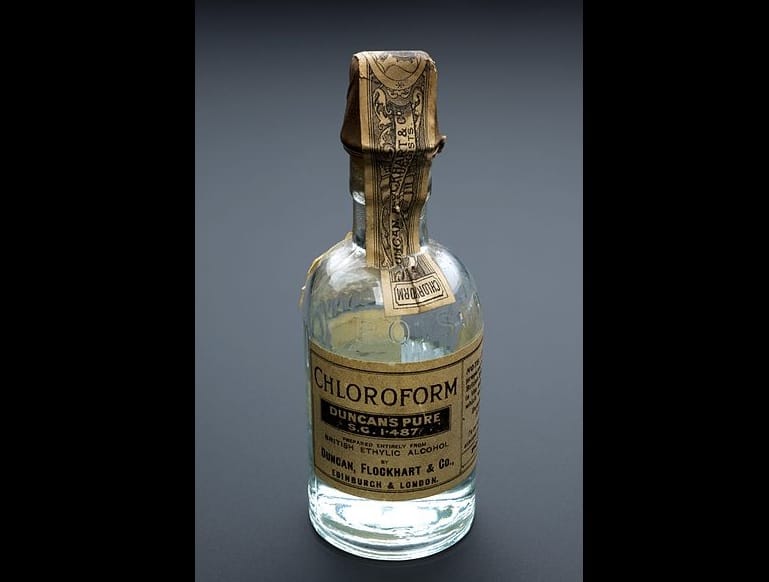
 Anaestheasier ltd.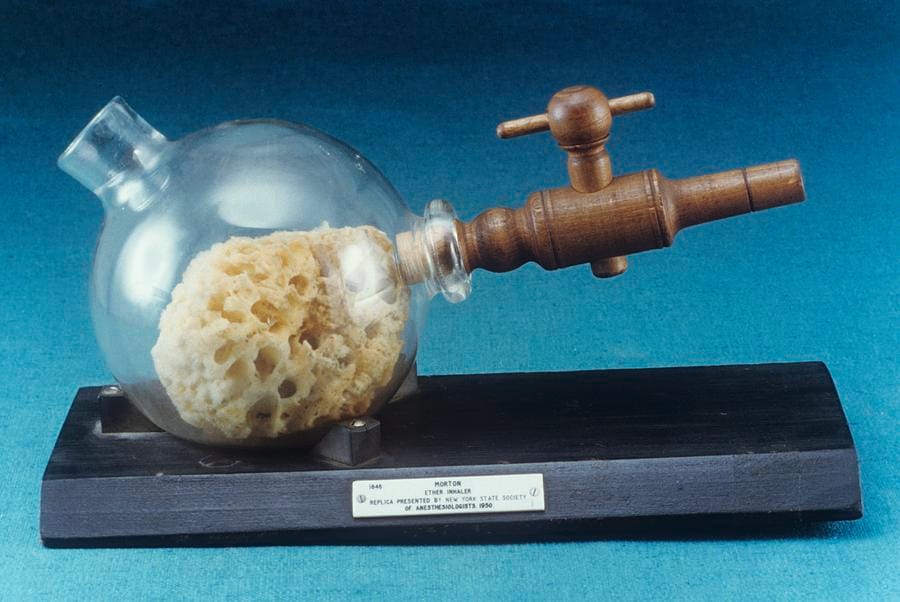
 Anaestheasier ltd.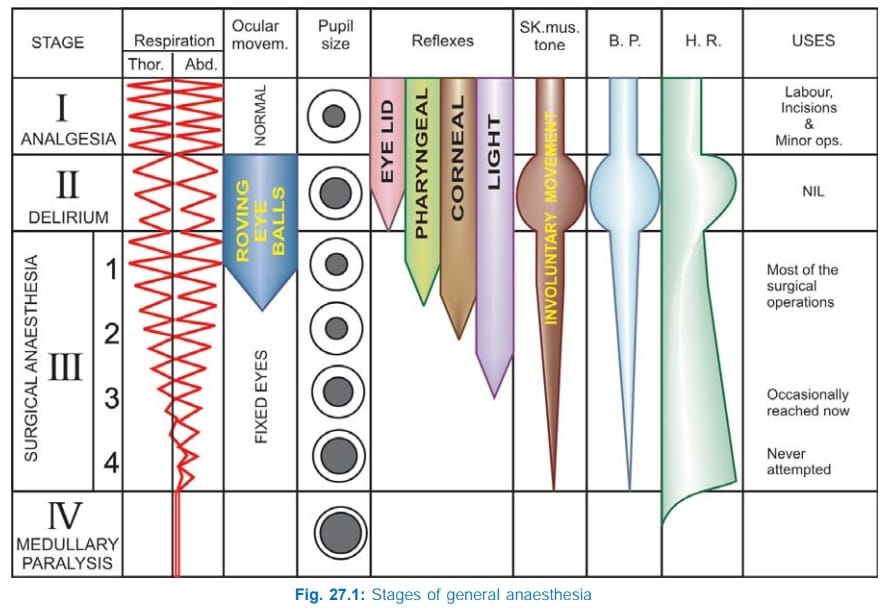
 Anaestheasier ltd.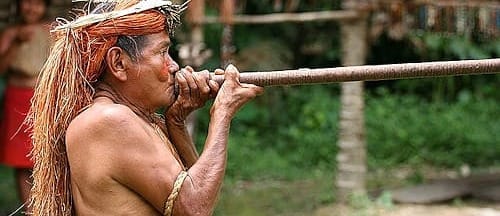


Just a quick reminder that all information posted on Anaestheasier.com is for educational purposes only aimed at trained professionals, and it does not constitute medical or clinical advice.
Anaestheasier should not be used as a definitive resource for academic writing, please reference original source material.
Anaestheasier® is a registered trademark.