Chloroform
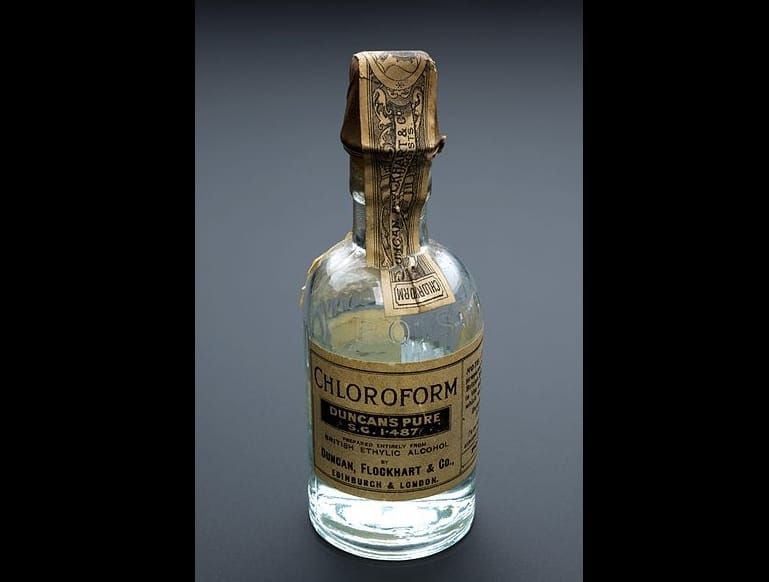
This is not examinable.
Or is it?
No, it's (almost) certainly not.
But is it interesting?
Oh absolutely.
It begins in 1831
Three independent scientists are tinkering in their workshops pouring a variety of bleaches onto other chemicals of dubious safety:
- German (Justus von Liebig)
- Frenchman (Eugène Soubeiran)
- American (Samuel Guthrie)
All three of them make chloroform by accident, a beautifully simple molecule CHCl3.
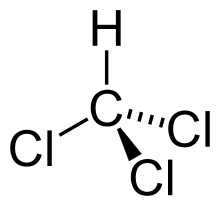
But as is often the case, none of them really know what they've made or what to do with it, so the world-changing possibilities remained hidden until the 1840s.
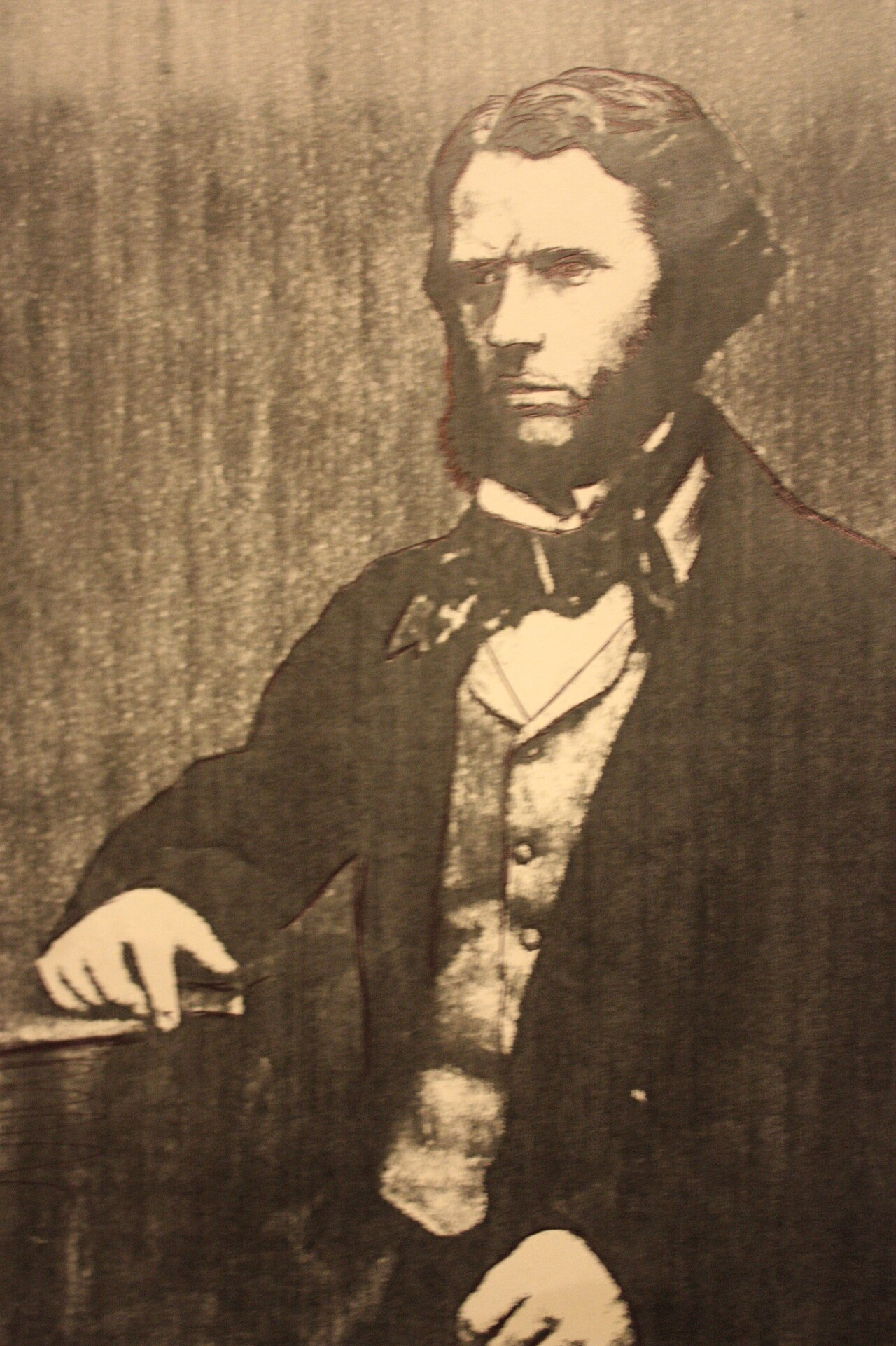
Meet Professor James Simpson 1811–1870

This Scottish obstetrician is heralded as the genius mind who introduced chloroform as an anaesthetic agent to the world of medicine.
This is having 'sampled' his own supply with some friends on the 4th November, and then given it to young and very grateful parturient Jane Carstairs for her delivery a few days later.

On 10 November 1847, he presented chloroform to the Edinburgh Medico-Chirurgical Society, during which he handed a handkerchief doused in chloroform around the audience for them to try.
They all felt splendid, some went unconscious and extraordinarily, nobody died.
They were sold instantly.
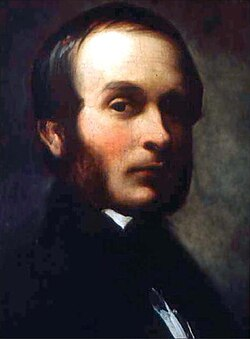
Now, just by looking at his face in the picture above, you can already tell two things:
- He loved a bit of drama
- He would absolutely shove his remi, propofol, ondansetron and gentamicin into one big syringe and hit go
And when it came to drama, boy did this bonkers obstetrician deliver (pun intended).
Having witnessed immense suffering in surgery during his time as a student, to the point he nearly quit medicine altogether, he had become determined to find a way to make operations and childbirth more bearable.
He'd dabbled with the hugely popular ether, using it to provide analgesia to women in labout, but didn't really get on with it so continued his search for a better agent.
You be the judge
If we skim back to 1842, and introduce ourselves to Robert Mortimer Glover, we find that he was the first physician to discover and explore the physiological effects of chloroform on animals.
He was very worried about its safety in humans, and correctly so, hence he didn't explore that option just yet.
His thesis on his work, however, won the Harveian Society's Gold Medal that year, and guess who one of his examiners was?
Ol' Prof Simpson.
Simpson was one of the examiners required to read the thesis, but later claimed to have never read it and then immediately and suddenly discovered how great chloroform was all by himself.
Pretty sus.
He then went as far as insisting that his first patient (Jane Carstairs) was so grateful for his care and amazing work, that she named her baby 'Anaesthesia', which is apparently completely untrue.
Poor Glover meanwhile paled into obscurity and went on to become addicted to his agent of discovery, and is presumed to have died from a chloroform overdose himself.

Francis Brodie Imlach 1819-1891
As seems to be the case with nearly everything in anaesthetics, the first successful and recorded clinical use of chloroform for a medical procedure was by a dentist.
By no mean coincidence, Imlach had his main dental practice at 48 Queen Street, literally just a few doors down from Simpson's offices at 52 Queen Street.
On 11 November 1847, Imlach successfully used chloroform to help extract the tooth of fellow dentist, James Darsie Morrison.
He went on to write all about it with characteristic humility as well.

All uphill from here
Despite the rather substantial and initially unexplained fatality rate, chloroform's popularity skyrocketed.
This is hardly surprising given that, for the first time in history, it was reliably possible to undergo surgery without having to be pinned down due to the sheer agony.
They were sticking it in everything.
Just look at this
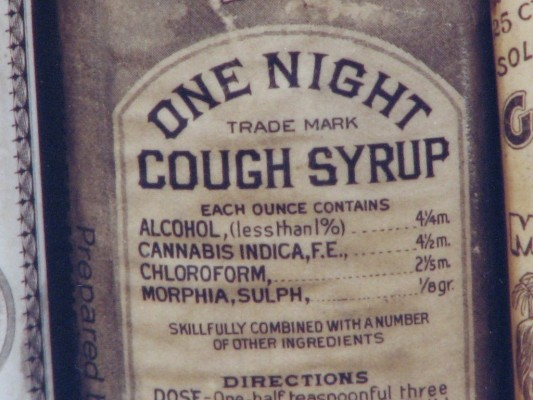
Can't cough if you're unconscious I suppose.
The first recorded death from chloroform's use was startling soon after its introduction, when 15 year old Hannah Greener died of chloroform toxicity in January of 1848 while having an infected toenail removed.
Dr John Snow 1813–1858
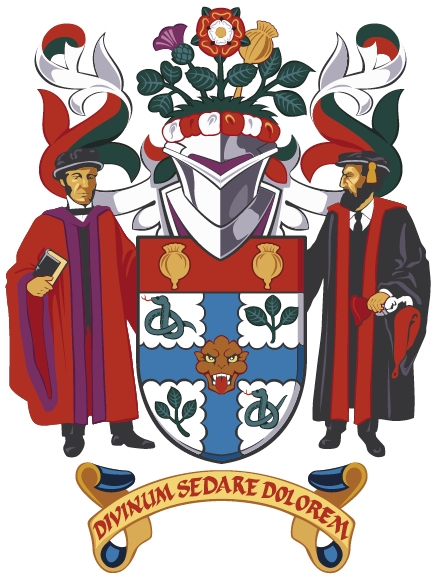
You've met Dr Snow before, he's standing on the left in medical robes holding his early work 'On the inhalation of ether in surgical operations'.
He famously administered chloroform to Queen Victoria during the birth of her eighth child, Prince Leopold, which helped overcome public and religious opposition to pain relief in childbirth.
He then did the same for her next baby Beatrice.
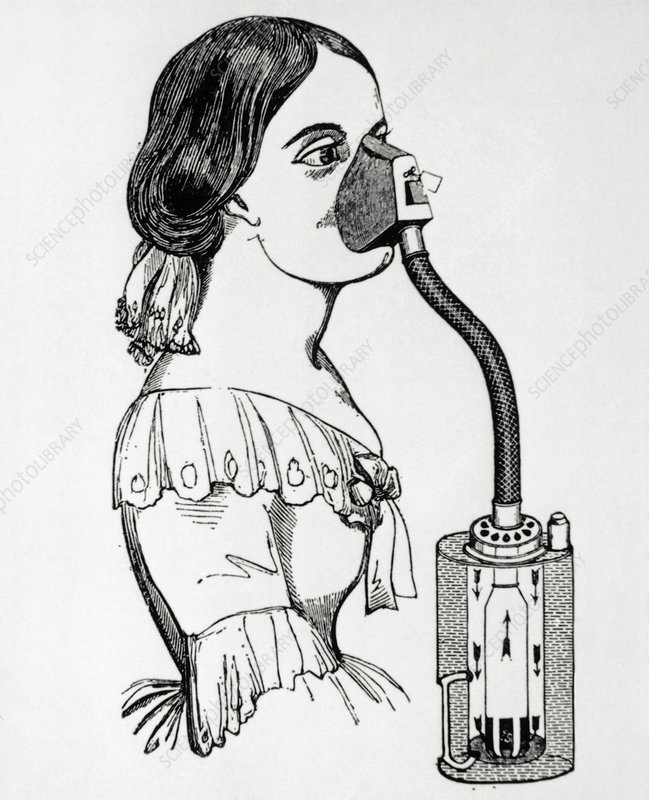
He wasn't overly satisfied with the rather concerning number of people carking it under anaesthesia, so produced a makeshift inhaler to try and regulate how much people were actually taking in.
Gimme some pharmacology
As you wish.
- Well absorbed through oral, inhalational and dermal routes
- Eliminated mainly unchanged through the lungs
- Between 2 and 10% metabolised and renally excreted
- Metabolism is hepatic (CYP450 obviously) to produce a variety of pleasant metabolites including hydrochloric acid and phosgene
- It's a positive allosteric GABAa modulator as is no surprise to anyone painfully familiar with the Primary FRCA syllabus
- Side effects include arrhythmias, respiratory depression and hepatic necrosis
The lethal oral dose is apparently around 45g. Do with that information what you will.
Is it safe?
Well not really.
As well as producing insanely toxic byproducts like phosgene when heated, it has a habit of triggering fatal cardiac arrhythmias if the patient wandered outside its relatively narrow therapeutic window.
They tried to make it safer:
- Dr Snow developed an inhaler in 1848 to try and administer a more regulated dose, and successfully reduced the fatality rate somewhat
- Dr. Joseph Thomas Clover then invented another device in 1862 that provided much more accurate dosing, and brought the mortality down further
Multiple and impressively enormous studies throughout various European countries eventually nailed the risk profile down to:
- 1 in 3,000 to 6,000 risk of dying under chloroform anaesthesia
- 1 in 14,000 to 28,000 for ether
This, combined with the increasing use of nitrous oxide, and the discovery of hexobarbital in 1932 meant chloroform use was steadily, and probably, resigned to the history (and poorly researched crime fiction) books.
What do you mean?
Chloroform became widely known for its criminal use in abductions, thefts, murders and whathaveyous, such that it became the cliché method of rendering someone unconscious in all the crime fiction stories and books.
This is frustratingly inaccurate, as it takes a good five minutes of huffing to actually incapacitate someone with chloroform.
So the chances of being able to knock someone out who doesn't want to be knocked out by holding a soggy rag on their face is next to zero.
In fact, in 1865, the actual Lancet offered "permanent scientific reputation" to anyone who could demonstrate instantaneous insensibility with chloroform.
Rant over.
The last documented use of chloroform was 1987, 140 years after Simpson and his mates got plastered in their apartment.
The main use for chloroform nowadays is in the production of PTFE or Teflon and as an industrial solvent.
Much less dramatic.
Oh look

Further Reading
 Anaestheasier ltd.
 Anaestheasier ltd.
 A.J. Wright
 Authors and Affiliations
 Contributors to Wikimedia projects