Understanding context-sensitive half-time
Mr Thorel is undergoing an elective cardioversion for his atrial fibrillation this morning, and you're his anaesthetist today.
After a careful and thorough preoperative assessment, your entire anaesthetic plan consists of...
...a single syringe of propofol.
Monitoring and capnomask on, cardiologist ready with finger on the button, and everything has been explained to the patient. You slowly press the plunger and the milk of amnesia sinks gracefully into his arm, drifting him off into delicious oblivion.
Forty seconds later, you nod to Dr Cardiologist who promptly sends 150 J of biphasic chest lightning through Mr Thorel's snoozing thorax, successfully cardioverting him back into sinus rhythm.
Mr Thorel yelps slightly but doesn't open his eyes, and continues to snooze peacefully for a further six minutes or so, after which he wakes up proclaiming to have just had the best sleep he's had in years.
Meanwhile
Mr Schnider, who has unfortunately been intubated and ventilated for severe pneumonia on intensive care for three days, is now deemed fit enough to try being woken up again.
Dr Intensivist switches off his propofol and fentanyl infusions, politely asks the bedside nurse to call him when Mr Schnider starts to show any sign of waking up, and wanders off to see the next patient.
Seventy-five minutes pass before Mr Schnider seems to show any signs of life, after which he promptly attempts to launch himself off the bed, tube still in situ, and it takes all the might and main of three nurses and a physio to keep him on the mattress.
So the question is, why did Mr Thorel wake up in six minutes, while Mr Schnider took over an hour?
The answer is context-sensitive half-time.
Even if the steady-state plasma concentration is exactly the same when you switch the pump off, propofol takes longer to wear off if the infusion has been going on for a longer duration of time.
The duration is the context.
A context-sensitive half-time, therefore, is one that will vary with duration of infusion.
So why does this happen?
I'll take propofol as our baseline example, and then we can compare our other commonly used drugs in due course.
Let's give a single bolus of propofol and see what happens.
- The propofol enters the vein
- The plasma concentration rises rapidly
- This establishes a concentration gradient between plasma and brain
- The drug diffuses from plasma to brain
- The brain concentration rises
- The patient goes unconscious
- The propofol then 'wears off'
- The patient wakes up again
Right.
Let's start with what we mean by 'wears off'.
Propofol molecules will drift down a concentration gradient regardless of where they are in the body. When we inject a syringe full of the stuff into the vein, we cause a surge in plasma concentration and establish an enormous concentration gradient between the blood and everywhere else in the body (including the brain).
This means that propofol molecules rapidly diffuse down this gradient into the brain, muscles, fat, and everywhere else the blood finds itself passing through.
After a while the plasma concentration drops to the point where it is now lower than the concentration in the brain, and so the molecules start diffusing back out of the brain.
Thus the brain concentration drops, and the patient wakes up again.
Simple enough so far.
Key point #1
Propofol is insanely fat soluble, so much so that it has to be emulsified in fat droplets before we can inject it in water (hence the opaque vial).
This means propofol is very keen to sit in fatty tissues, including white matter, lipid membranes and adipose tissue around the body. So it will readily redistribute from the plasma into the brain (hence the very fast onset of action after injection), as well as other lipid-y places around the body.
Key point #2
As soon as you have given the propofol, and it starts redistributing throughout the body, the plasma concentration drops.
This means that quite soon after the patient falls asleep, the plasma concentration drops below the brain concentration, and propofol then starts diffusing back out of the CNS.
Pretty quickly the brain concentration drops below the threshold required for unconsciousness, and the patient wakes up.
Note that all of those propofol molecules are still inside the patient, distributed in a variety of fatty places around the body, until they start to be broken down by the liver and excreted by the kidney.
Let's throw in a diagram
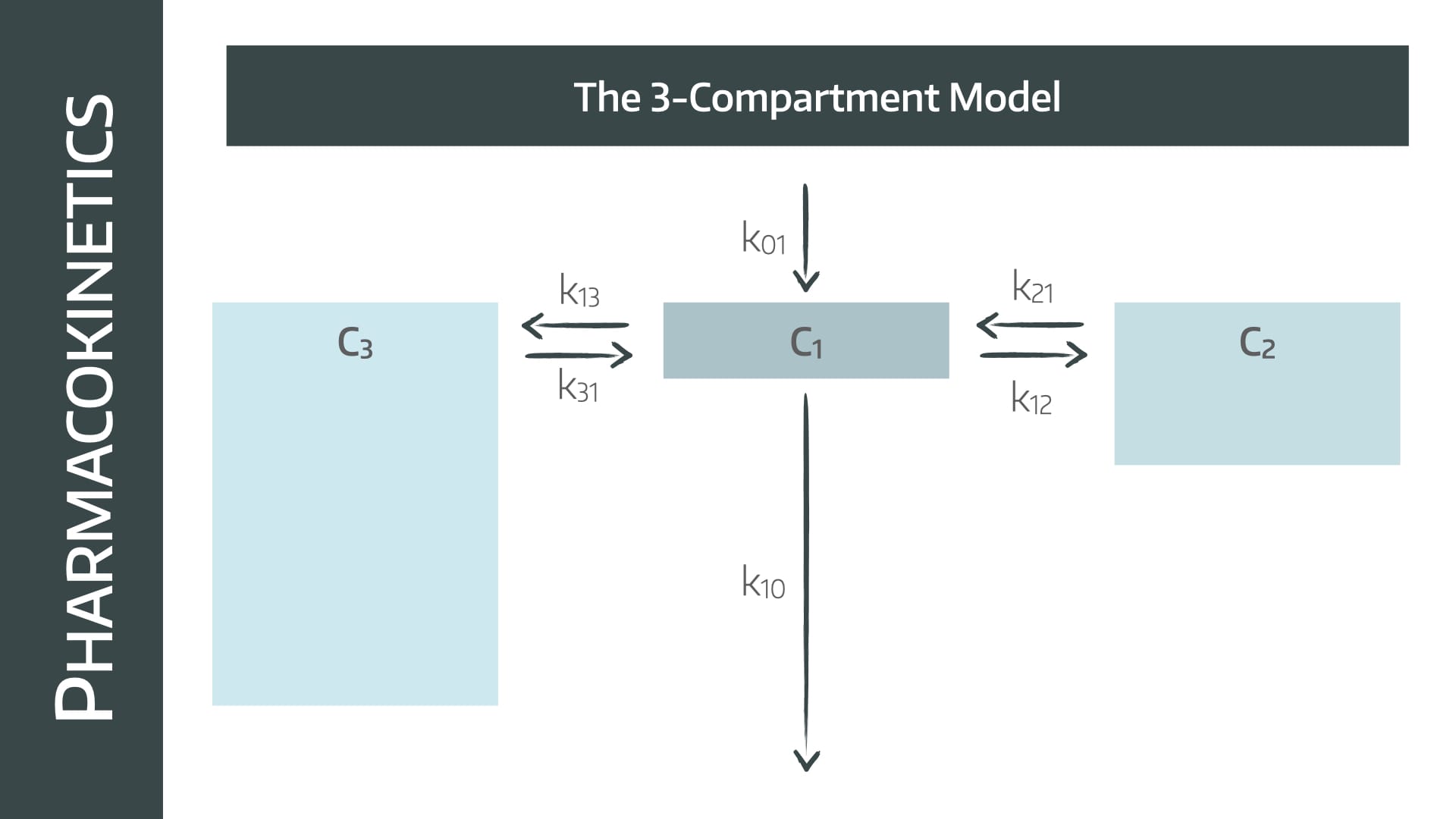
This FRCA-primary-favourite three-compartment model shows the following:
- Drug can only be administered to the blood (compartment 1)
- Drug then redistributes into the highly vascular compartment (C2) which includes the brain and liver
- It also redistributes, more slowly, into the less vascular compartment (C3) which contains muscle and fat
- Drug can only be cleared from C1
- The plasma concentration then drops in C1 as propofol redistributes and starts being cleared
- The drug then redistributes from C2 and C3 back into C1
- This means plasma concentration drops more slowly (kind of an auto-infusion from the tissues that maintains plasma levels)
- Finally all the drug has moved back into the plasma and is cleared from the body
The key thing to take away from this image is that the rate at which the drug molecules move between compartments is determined by a rate constant, which varies between drugs, compartments and patients.
- k12 is the rate constant for transferring from compartment 1 to compartment 2
- k21 is the rate constant for moving back again
- k10 is the rate constant for elimination (from compartment 1 to nothing)
You get the idea.
So what happens with a bolus?
- We give a large dose into C1
- Much of this redistributes to C2
- A little of this redistributes to C3
- The plasma concentration drops in C1
- The drug rapidly moves back from C2 and C3 into C1
- The plasma and brain levels drop quickly
And what happens with an infusion?
- The continuous infusion into C1 has allowed continuous redistribution into C2 and C3
- C2 and C3 are relatively 'saturated' with lots of propofol
- The infusion is stopped
- The plasma concentration drops
- Propofol rapidly moves from C2 and C3 back into C1
- There is so much propofol in C3 that it continues to maintain relatively high plasma concentrations for a while
- This in turn maintains a relatively high brain concentration for a while
- This means the clinical effect takes longer to wear off
Now let's compare
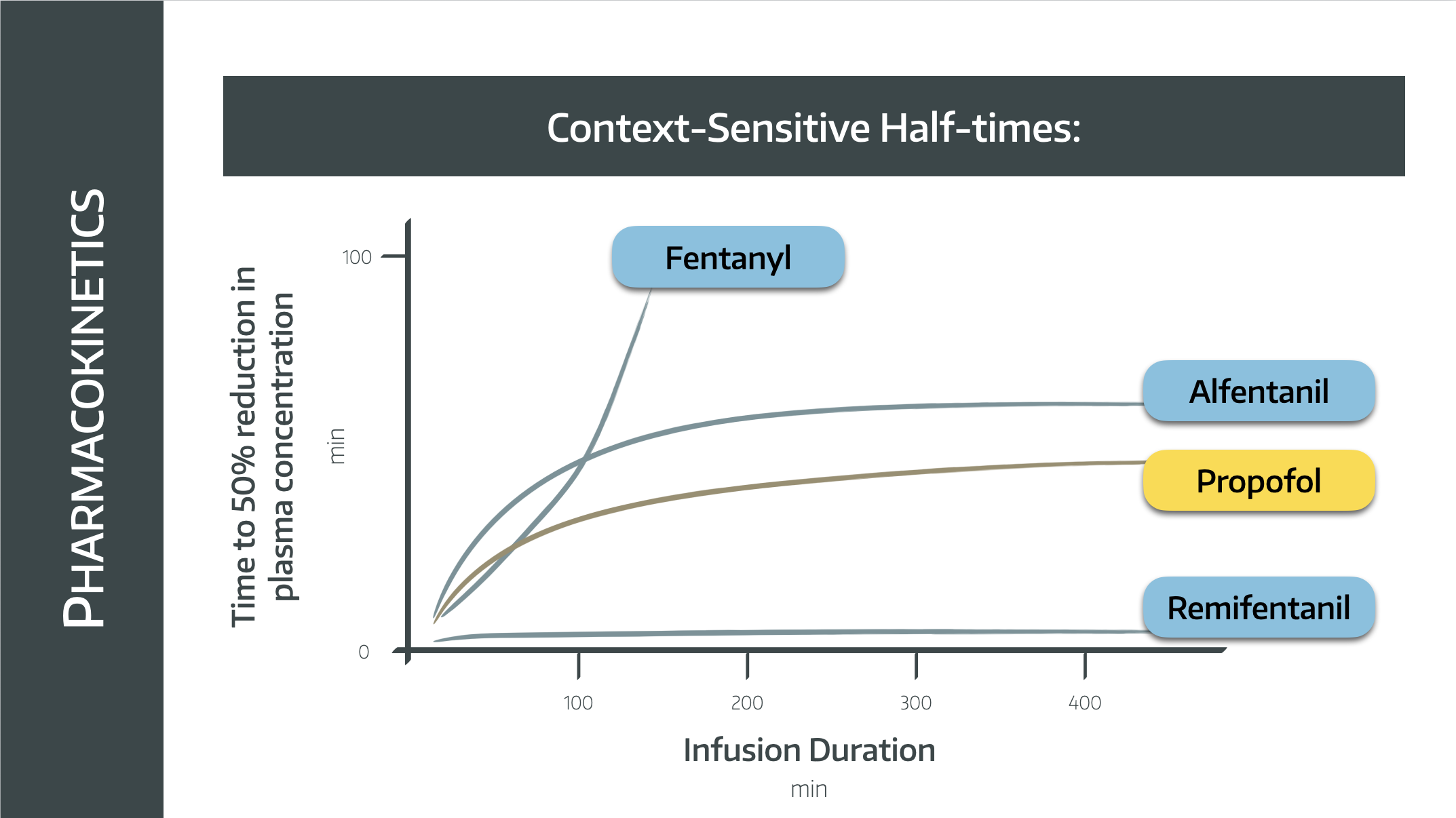
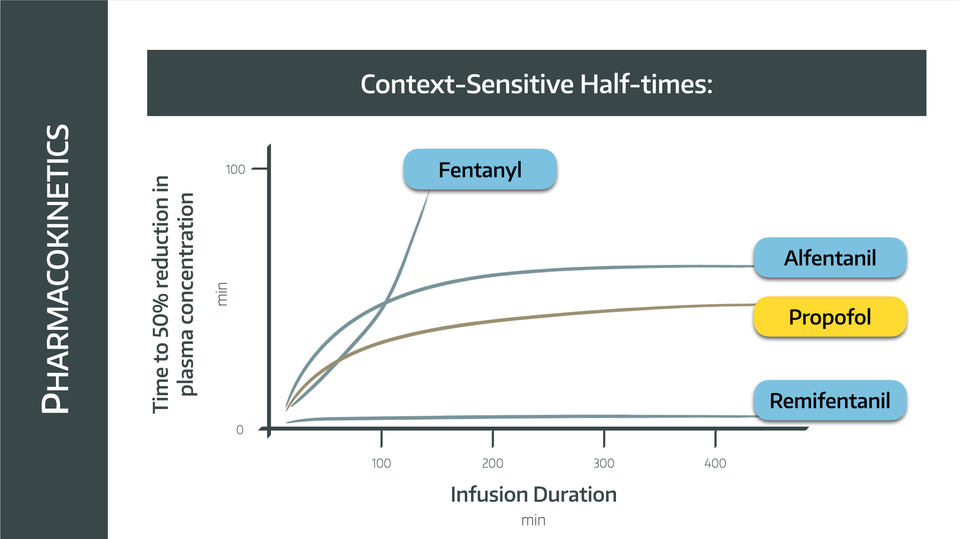
This is the graph of context-sensitive half-times for four of our favourite agents.
The graph is saying that:
- It will take longer and longer for propofol's plasma concentration to drop by 50% as the duration of infusion increases, but this plateaus at around 20-30 minutes
- Alfentanil follows a similar pattern, reaching a plateau at around 40-60 minutes
- Fentanyl's CSHT will continue to rise up to a whopping 300-360 minutes before it plateaus
- Remifentanil is essentially context-insensitive and takes no longer to wear off after an infusion of any duration
What's strange about this?
Propofol is more lipid soluble than all of the others, including fentanyl, so it seems counterintuitive that fentanyl appears to accumulate in the fat to a much greater degree, producing a longer CSHT, no?
Key point #3
This is why we made the point about rate constants earlier, because it matters how quickly a drug moves between compartments, not just how much drug is in each one.
You already know this, because you give the fentanyl at induction first - allowing it time to diffuse into the central nervous system - before you then give the propofol.
The same happens in reverse.
If we've run an infusion for days on end and absolutely saturated the peripheral fatty compartments with propofol and fentanyl, and then we stop the infusions, the propofol will move back into the plasma compartment more rapidly than the fentanyl.
The molecules need to be in the plasma in order for the liver and kidneys to clear them out of the system.
This brings us to:
Key point #4
Propofol has a ridiculous clearance of around 1.5-2.5 litres per minute thanks to a combination of rapid hepatic uptake and metabolism, and extrahepatic metabolism in the lungs, both largely performed by the CYP2B6 enzyme.
Fentanyl and alfentanil, meanwhile, are allowed to languish in the plasma for much longer, waiting patiently to be broken down by CYP3A4.
As a result, the propofol molecules are cleared more quickly, the plasma concentration drops faster, and the context-sensitive half-time is shorter.
Isn't propofol an inhibitor of CYP3A4?
It absolutely is, you clever clogs.
Propofol is mainly broken down by CYP2B6 but it is also a substrate for CYP3A4.
In doing so, it is also an inhibitor of CYP3A4, thereby decreasing the clearance of fentanyl and alfentanil by around 15%.
So if you give propofol as well as fentanyl, or alfentanil, then it will drive the opioid's CSHT even higher by slowing down its clearance even further.
So what's so special about remifentanil?
Ah yes, the magical opioid that you can switch off at any time and it's gone in five minutes.
How does that work?
Remifentanil is moderately lipid soluble (more than alfentanil, less than fentanyl) so one might expect it to spread throughout the body with a large volume of distribution.
If so, this would lead to accumulation and increase the CSHT.
But it doesn't.
This is because of the cheeky little ester linkage on the nitrogen side chain.

This link is rapidly cleaved by nonspecific esterases into the inactive remifentanil acid.
The key is that these esterases are everywhere, in the tissue and plasma, so the molecules haven't got a hope in hell of accumulating anywhere as there's nowhere safe to hide from their metabolic fate.
This is why we use remifentanil for fifteen-hour maxfacs operations, not fentanyl.
Let's summarise
So hopefully now we can answer the following two questions with a bit more confidence.
What are the four things that affect CSHT?
- Volume of distribution
- Speed of redistribution
- Duration of infusion
- Clearance
Why does context-sensitive half-time matter?
- Many of our drugs are given as infusions
- Many of our drugs are very fat soluble
- You want to be able to time your patient's wake up correctly
- It's going to take longer after a longer procedure
So if you don't want to be sat there like a lemon waiting hours for your TIVA patient to wake up, read on.
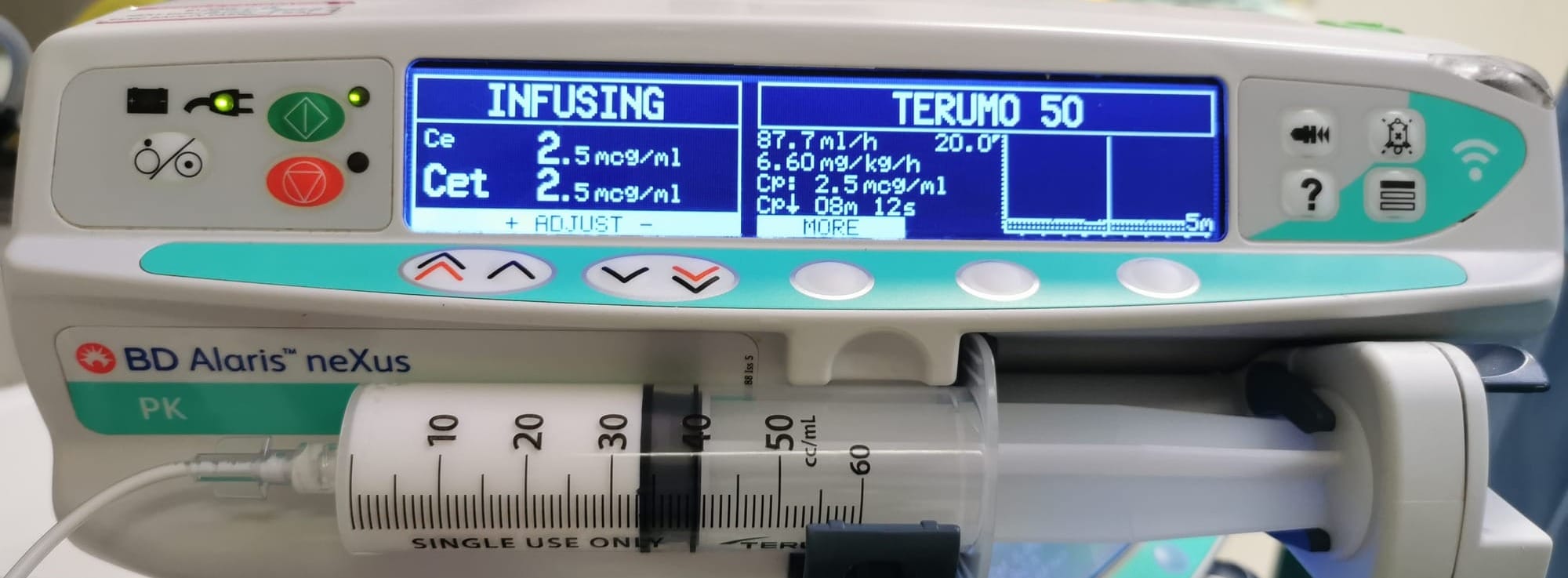
In this image the pump is telling you the plasma concentration is going to take 8 minutes 12 seconds to drop to a level where the patient is likely to wake up if you swtich it off now.
This number will gradually increase as the surgeon continues to faff about, and allows you to work out how to adjust your infusion so that your patient wakes up when you want them to.
When comparing our agents:
- Fentanyl is very lipid soluble, with relatively slow clearance, and moves fairly slowly between compartments - as a result it accumulates rapidly
- Propofol is more lipid soluble than fentanyl, but it moves between compartments faster and is cleared very quickly
- Alfentanil is less fat soluble than fentanyl and has a much smaller volume of distribution, so it doesn't accumulate nearly as much
- Remifentanil is moderately lipid soluble, but is metabolised so insanely fast that it never accumulates, no matter how long you run the infusion for
And that's it.
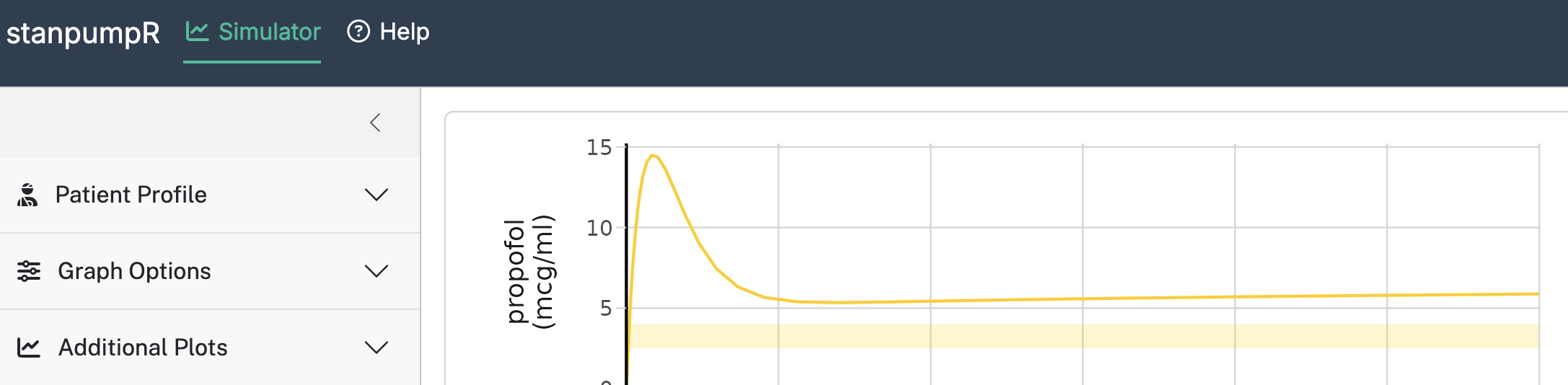
Go play with this simulator
It's incredibly cool and very useful for understanding how our anaesthetic drugs behave after bolus doses and infusions.
Here's our video
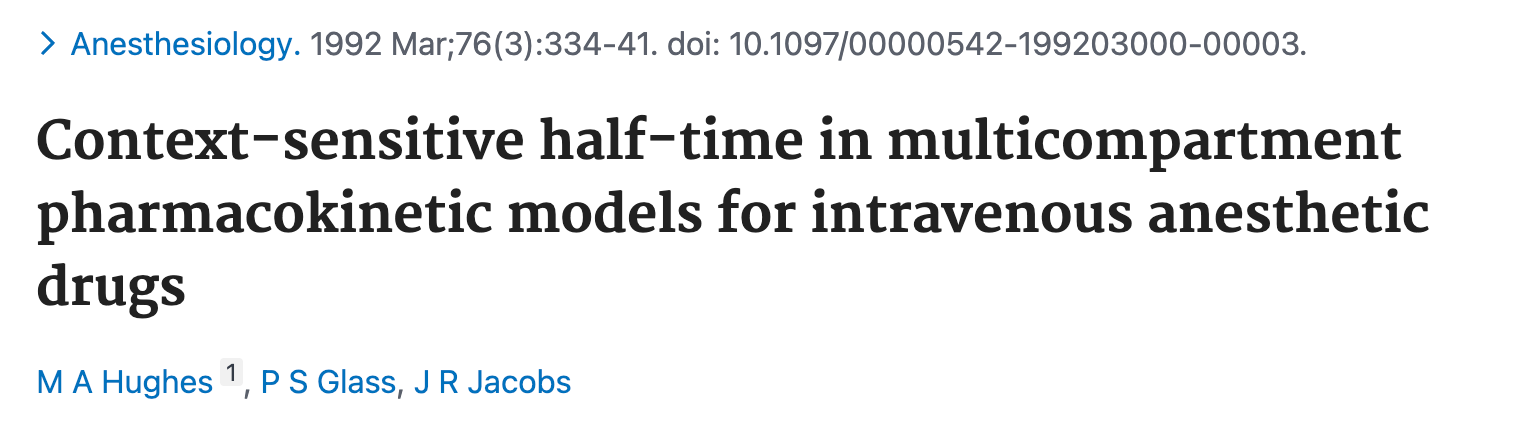
References and Further Reading
 Alex Yartsev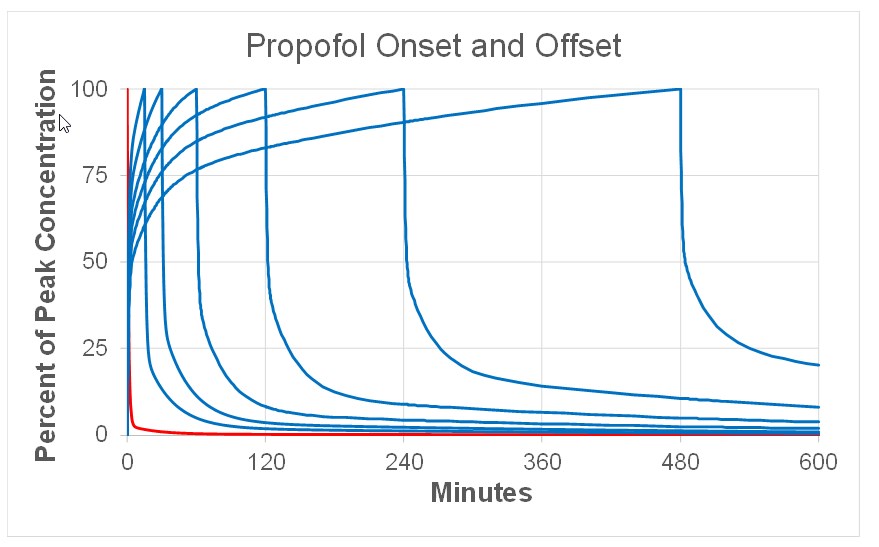
 Edward T. Gilbert-Kawai
Other understanding posts
 Anaestheasier ltd.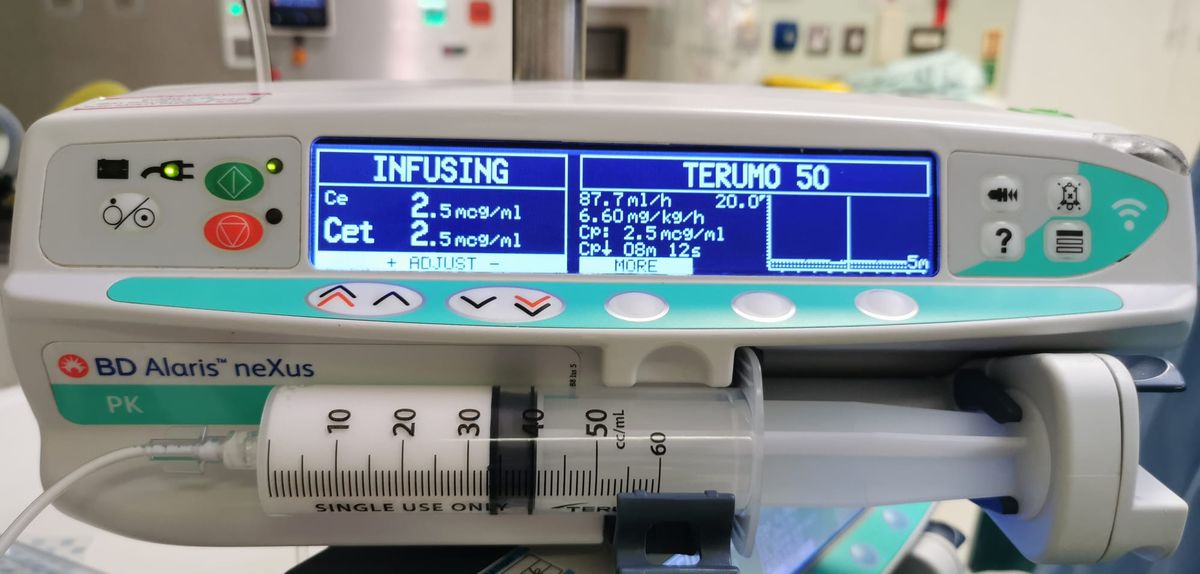
 Anaestheasier ltd.
 Anaestheasier ltd.
Just a quick reminder that all information posted on Anaestheasier.com is for educational purposes only aimed at trained professionals, and it does not constitute medical or clinical advice.
Everything on this website is written by a trained (human) anaesthetist unless explicitly stated otherwise. LLMs may be used to assist with research and proofreading, but all writing is done by hand.
Anaestheasier should not be used as a definitive resource for academic writing; please reference original source material.
Anaestheasier® is a registered trademark.