Paediatric obesity

We talk a lot about obesity in adults and the profound implications it can have on our anaesthetic plan and the risks involved, because it's something we see a lot of.
After all, in 2024 there were over a billion people living with obesity worldwide.
However we tend to talk a lot less about obesity in children, largely because it has (until recently) been a much less common problem.
This is changing.
Obese children also need surgery more often than children with a normal body habitus, so it's rather important to be aware of how it impacts your job as the anaesthetist.
What operations do children with obesity need?
Of course they might need any manner of operation that a child without obesity could require, however there are two categories of procedure that are disproportionately more prevalent among kids with obesity:
- Adenotonsillectomy (for sleep apnoea)
- Bariatric surgery
What's the definition of obesity?
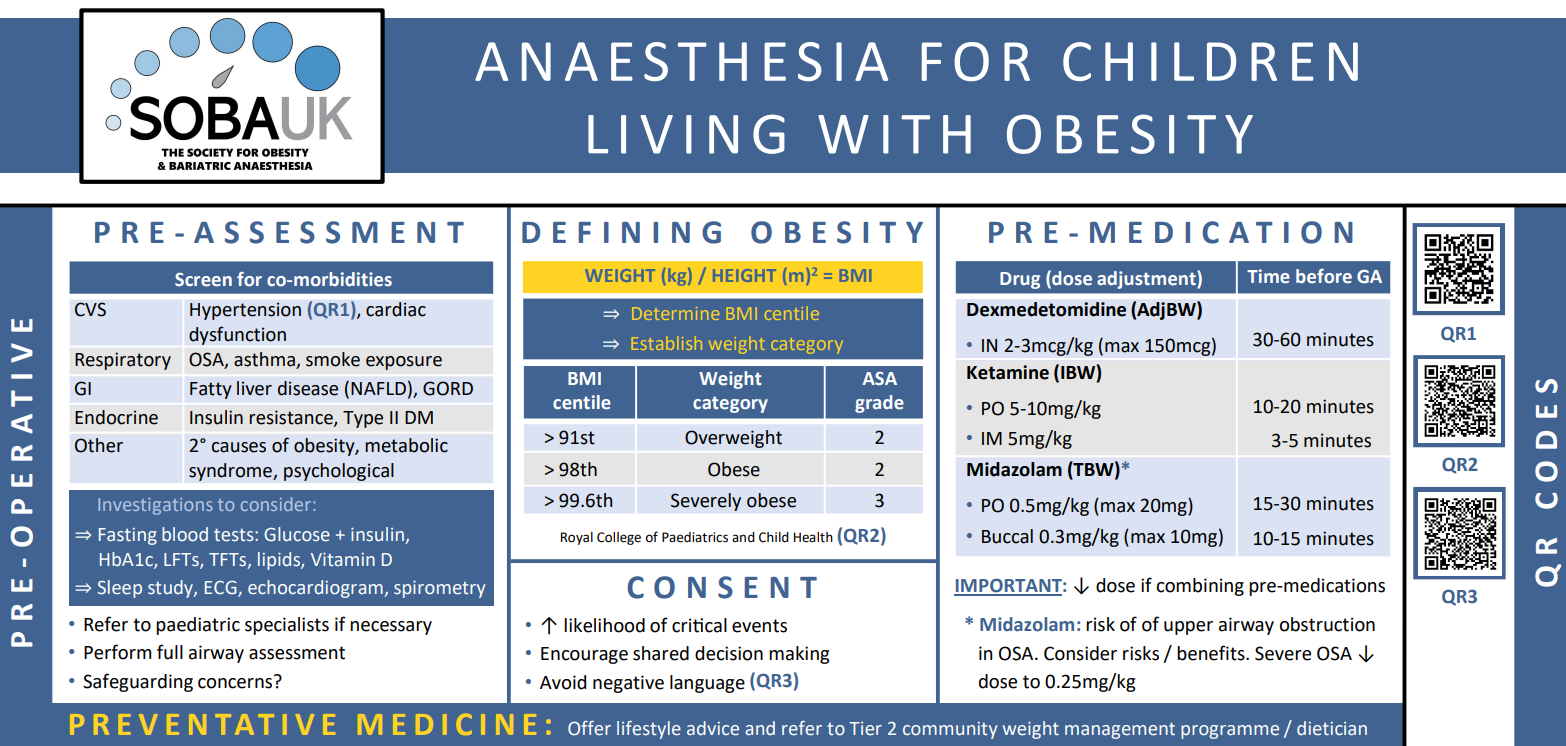
Obesity is defined by body mass index, which is calculated using the formula:
- Body weight/height²
How you feel about the validity of this physiological parameter is a separate issue, but for now it's the most widely used measure of 'overweightness' around the world.
The WHO definitions for children that you need to know are as follows:
For children aged 0 - 5 years
- Overweight = Weight-for-height >2 standard deviations above the median
- Obese = WFH >3 standard deviations above the median
- Severely obese doesn't exist (yet)
For children aged 5 - 19 years
- Overweight = BMI for age >1 standard deviation above the median
- Obese = >2 SD
Why are more children becoming obese?
Humans have evolved to survive on lean, infrequent meals that required a lot of walking, foraging or chasing something hairy and/or quick.
In vast swathes of the world, life has been becoming steadily more sedentary, more stressful and fuelled by more processed, calorie-dense but nutrient-poor low quality dopamine-triggering food and drink.
We've gone from chasing deer across plains for three days, to a society where pushing a button that tells a man on a scooter to bring Dr Pepper and pizza to your front door is cheaper and easier than getting hold of organic vegetables.
It's hard not to put on weight.
So it's important to recognise, and be sensitive to, the myriad features that contribute to people putting on excess weight, because it helps build a framework upon which you can start figuring out how to fix it.
The question could also be framed in an exam as 'what are the causes of childhood obesity?' which can be answered in a nicely structured format as follows:
Antenatal causes
- Gestational diabetes
- Maternal smoking leading to intrauterine growth restriction
Lifestyle causes
- Sedentary lifestyle
- Excessive consumption of particularly highly processed food and drink
- Sleep deprivation
Lower socioeconomic status is not a 'cause' as such, but a definite risk factor.
Genetic causes
- Polygenic factors
- Melanocortin-4 receptor defects
- Leptin deficiency
Medication side effects
- Glucocorticoids
- Antidepressants
- Antiepileptics
- Antipsychotics
- Sulfonylureas
Endocrine causes
- Hypothyroidism
- Pseudohypoparathyroidism
- Growth hormone deficiency
- Hypercortisolism
- Polycystic ovarian syndrome (PCOS)
Specific syndromes
- Prader-Willi
- Fragile X
- Beckwith–Wiedemann
There are many more, but it's unlikely you'll need (or be able) to list more than one or two in an exam setting.
What are the effects of obesity in kids?
Many of the same principles apply as in adults, and this answer is best broken down by body system, addressing each in turn.
If you're asked this in an exam, start with a strong introduction such as,
"Obesity in children is an increasingly prevalent, multisystem disease that has a profound impact on every major system in the body, and therefore requires careful assessment and planning by the anaesthetist."
Then you can launch into your system-by-system response.
Airway
All of the soft tissues are enlarged, including the tongue, pharynx and neck, resulting in:
- Obstructive sleep apnoea
- Difficult facemask ventilation
The big thing (literally) is macroglossia, where excess tongue tissue increases its propensity to flop backwards after induction of anaesthesia and obstruct the airway.
Interestingly, obesity doesn't necessarily make intubation harder, although it does make positioning the head appropriately more difficult, and of course you have less time to get the deed done.
Respiratory
Excess weight on the chest and diaphragm leads to:
- Reduced respiratory compliance
- Reduced functional residual capacity
- Hypoventilation
- Increased closing capacity
- Increased shunt
- Air trapping
This means there is less of an oxygen reserve to play with during any apnoeic periods, and just to further complicate things, obese children have a higher oxygen demand as well, so they use it up even faster.
This is also worse when lying flat, as you might have guessed, hence the advice to ramp the patient when inducing anaesthesia.
Oh and they're also more likely to have asthma and bronchospasm, just to make it even more interesting.
Cardiovascular
We know that obesity tends to cause hypertension and the same is true in kids - obesity triples the risk of hypertension.
The cause of this is multifactorial and includes:
- Increased blood volume and cardiac output
- Sympathetic and RAAS activation
- Insulin resistance
- Renal sodium retention
Long term complications include:
- Pulmonary hypertension (if OSA)
- Right heart failure
- Vascular disease
- Left ventricular hypertrophy
- Left atrial dilatation
- Cor pulmonale
GI
There's increased pressure in the abdomen due to the excess abdominal wall adipose tissue.
This increases the incidence of GORD. (1 in 5 obese kids have GORD)
It's not certain if this increases the risk of aspiration, but it's not exactly going to reduce the risk is it?
There aren't currently any concrete guidelines on whether we should be adjusting fasting times for obesity in children.
What comorbidities are associated with obesity in children?
Airway and respiratory
- Asthma
- Recurrent chest infections
- Obstructive sleep apnoea
Cardiovascular
- Heart failure
- Hypertension
- Atherosclerosis
- LV hypertrophy
Neurological and psychological
- Idiopathic intracranial hypertension
- Anxiety and depression
- Low self esteem
- Poor academic performance
GI
- GORD
- Fatty liver disease
Endocrine
- Type 2 Diabetes Mellitus
- Metabolic syndrome
- Polycystic ovarian syndrome
- Hyperlipidaemia
Haematological
- Anaemia (usually iron deficiency)
Remember that anaemia will make any respiratory or cardiovascular issues worse, by reducing the oxygen-carrying capacity of the blood.
Musculoskeletal
- SUFE (slipped upper femoral epiphysis)
- Blount's disease (bow legs)
What investigations should I order before surgery?
We're not just gas technicians anymore, we're perioperative physicians, and should be taking a proactive approach to the preoperative optimisation of our patient's comorbidities to improve their chances of the best possible outcome after surgery.
With that in mind, you could consider the following investigations for a child with obesity who is undergoing surgery:
- Polysomnography to assess for presence and severity of sleep apnoea
- Peak flow to assess asthma severity
- Blood pressure
- ECG
- Echocardiography if any evidence of cardiovascular dysfunction
- Full blood count and iron studies to look for anaemia
- Thyroid function tests, urea and electrolytes
- Serum lipids, liver function tests and ultrasound if concern for hepatic steatosis
- HbA1c and fasting glucose and insulin if worried about TIIDM
- Vitamin D level
What risks should I consent for?
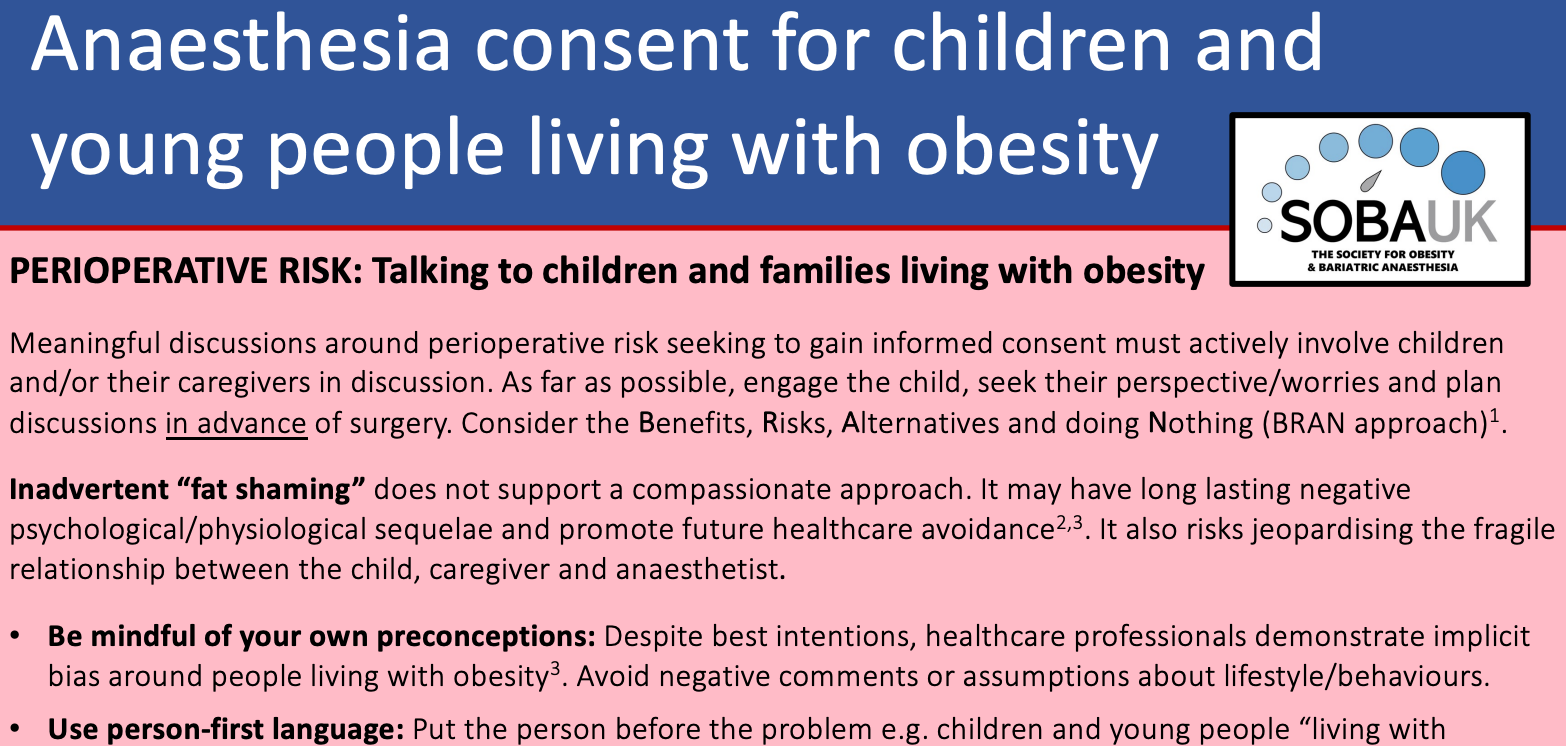
It should come as no surprise that anaesthesia is higher risk in obese children, however this is not often clear to the child or their parents at the preoperative consenting stage.
Thankfully, anaesthesia has become unfathomably safe in recent years, however this brings with it an incredibly high expectation of what can safely be achieved with a syringe of propofol and a laryngoscope.
It is our duty to sensitively convey the increased risks of anaesthesia associated with obesity, so that we can tick the box of properly 'informed' consent.
Specifics to consent for
There is an increased risk of:
- Airway obstruction
- Difficult face mask ventilation
- Bronchospasm
- Post op chest infection
Gas induction takes longer and IV induction is safest, however
- IV access may be difficult
- Regional anaesthesia may be more challenging
Induction and emergence may take longer.
How do I anaesthetise them?
Carefully, obviously, but paying particular attention to the following:
How do I estimate their weight for drug dosing?
Total body weight is the number the scales give you.
- Ideal body weight = 50th centile BMI for age x height²
- Adjusted body weight = IBW + 0.35 x (Total - ideal body weight)
What weight should I use for each drug?
The big caveat here is that we don't have a brilliant understanding of pharmacokinetics in kids with obesity, hopefully for obvious reasons, but the generally advice is as follows:
For the commonly used drugs, use the following:
- Midazolam - total body weight
- Propofol - ideal body weight
- Fentanyl - adjusted
- Remifentanil - adjusted
- Morphine - ideal
- Paracetamol and ibuprofen - adjusted
- Ondansetron and dexamethasone - total
- Rocuronium - ideal
- Suxamethonium - total
- Sugammadex - total
- Atropine - total
- Lidocaine - total
- Bupivacaine - ideal
- Penicillins - total
- Gentamicin - adjusted
This box is for educational purposes to show that different drugs should use different weights. When making your own drugs up, always double check which weight you should be using from a verified source such as SOBA or the BNFc.
Preoperative
- Be cautious with sedating premedication, especially where there is confirmed or suspected obstructive sleep apnoea
- Ketamine or dexmedetomidine may be a better choice than benzodiazepines, or at least reduce the dose as there is risk of significant hypoventilation
Induction of anaesthesia
- Intravenous induction is preferred due to difficult airway management but obviously it's going to depend on the individual child
- Ramped position with external auditory meatus and sternal notch aligned
- Induce in theatre to avoid added risk of transfer from anaesthetic room
- Have a low threshold for intubating rather than using a supraglottic airway, even for minor procedures
- SOBA recommend videolaryngoscopy as first line
The big risk is that you gas a kid down until they're nicely sat in the super-high-risk stage of anaesthesia, whereupon they obstruct, you can't bag them and it's then hard to find a vein and it all goes pear shaped.
Positioning
- Minimise transfers and changes in position where possible
- Flattening the patient will reduce respiratory compliance, increase airway pressures and atelectasis
- Heavier patients are at increased risk of sliding off the table so use safety straps
- Obesity carries the risk of pressure point injuries, so pay attention to pressure areas and use appropriate padding
- Ensure your equipment is safe to use for the weight of your patient
Analgesia
- Kids with OSA are more sensitive to hypoventilation after opioids
- But kids with obesity may also have worse pain
- So you can use opioids, but you need to balance these risks on an individual basis
- As always, you're going to use your multi-modal opioid sparing analgesic techniques including the use of regional anaesthesia where appropriate.
Emergence and recovery
Remember that extubation is just as, if not more, risky as intubation.
- Ramped position
- Preoxygenation
- Bite block or oropharyngeal airway
- Adequate PEEP to avoid negative pressure pulmonary oedema
- Full reversal of neuromuscular blockade
- Wide awake extubation
- Consider extubation onto NIV
- Lower threshold than normal for admission to HDU or ITU postoperatively especially if severe OSA
- Day case surgery is still possible, if they meet all the usual criteria - obesity alone is not necessarily an indication to stay overnight
Are there any studies to know about for the exams?
Yeah they like to ask about the PEACHY study.
It was a large, multicentre, prospective cohort study published in 2021 and was the first big study to estimate UK paediatric obesity prevalence perioperatively.
This study aimed to figure out:
- The prevalence of obesity in UK children undergoing anaesthesia
- The incidence of adverse perioperative events
- How this compares to national data
It found:
- Nearly a quarter of children between 2 and 16 are overweight or obese
- They have an increased risk of laryngospasm and bronchospasm
- They have worse postoperative pain and nausea and vomiting
- They spend longer in PACU
- They stay longer after tonsillectomy
- They're harder to face mask ventilate
If you do nothing else
Download a copy of these amazing infographics from SOBA UK which has essentially everything you need to know in one place.
References and Further Reading


Other paediatric posts
 Anaestheasier ltd.
 Anaestheasier ltd.
 Anaestheasier ltd.
Just a quick reminder that all information posted on Anaestheasier.com is for educational purposes only aimed at trained professionals, and it does not constitute medical or clinical advice.
Everything on this website is written by a trained (human) anaesthetist unless explicitly stated otherwise. LLMs may be used to assist with research and brainstorming, but all writing is done by hand.
Anaestheasier should not be used as a definitive resource for academic writing, please reference original source material.
Anaestheasier® is a registered trademark.