Non-respiratory functions of the lungs
They do other stuff too.


"What do the lungs do?"
'Gas exchange and acid-base balance, by getting rid of carbon dioxide.'
"Correct, what else do they do?"
'Er...'
It might just blow your mind, dear reader, to hear that the lungs do stuff other than gas exchange.
I know.
These busy little bellows are up to all sorts of trickery. Trickery that can affect your patient, your anaesthetic, and equally importantly - your FRCA result.
What are the non-respiratory functions of the lungs?
Classic Final SOE/FCPE question, with a big enough answer to require a decent structure if you're planning on scoring top marks.
Start with a nice introductory headline, something like:
"As well as gas exchange and acid-base balance, the lungs play a variety of other essential roles that include:
- Metabolic functions, including the metabolism of endogenous substances
- Pharmacokinetic functions, including drug uptake and metabolism
- Synthetic, secretory and neuroendocrine functions
- Immune and protective functions
- Vascular filtration and blood storage
- Haematological functions, including platelet production and fibrinolysis"
Then you stop talking and wait.
Don't go any further just yet.
Pause until the examiner invites you to describe one or more of these in more detail.
You've handed them six lanes to wander down, and you'll know more than enough about each of them by the end of this post.
What are the metabolic functions of the lung?
The most well known is the conversion of angiotensin I into angiotensin II by the imaginatively titled angiotensin-converting enzyme.
- ACE also breaks down bradykinin
- This is why ramipril causes a cough - ACE inhibition means bradykinin build up which irritates the lungs
The lung also metabolises:
- Noradrenaline (monoamine oxidase and catechol-O-methyltransferase)
- Serotonin (MAO)
- Prostaglandins PGE₁, PGE₂ and PGF₂α
- AMP, ADP and ATP are all metabolised to adenosine
- ANP
Note that this isn't complete metabolism, as otherwise giving noradrenaline via a central line would achieve naff all - it's just partial metabolism.
Adrenaline and vasopressin pass through relatively unaffected.
I imagine that as soon as you have mentioned ACE, the examiner will move you swiftly on.
What drug metabolism occurs in the lung?
There are several isoforms of the CYP450 enzymes present in the lungs, so naturally some drugs will undergo at least a degree of metabolism on their pulmonary journey.
- Prilocaine is metabolised in the lung as well as elsewhere in the body
- Some inhaled steroids such as beclometasone are prodrugs, metabolised in the lung into their active form
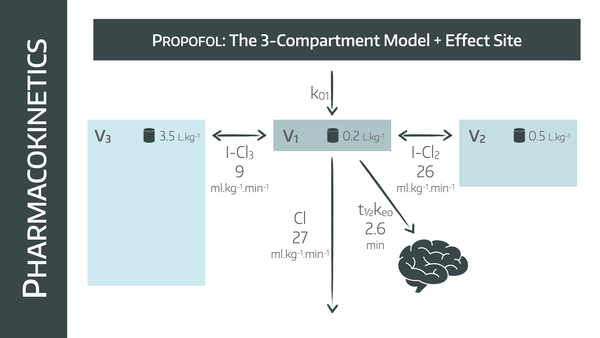
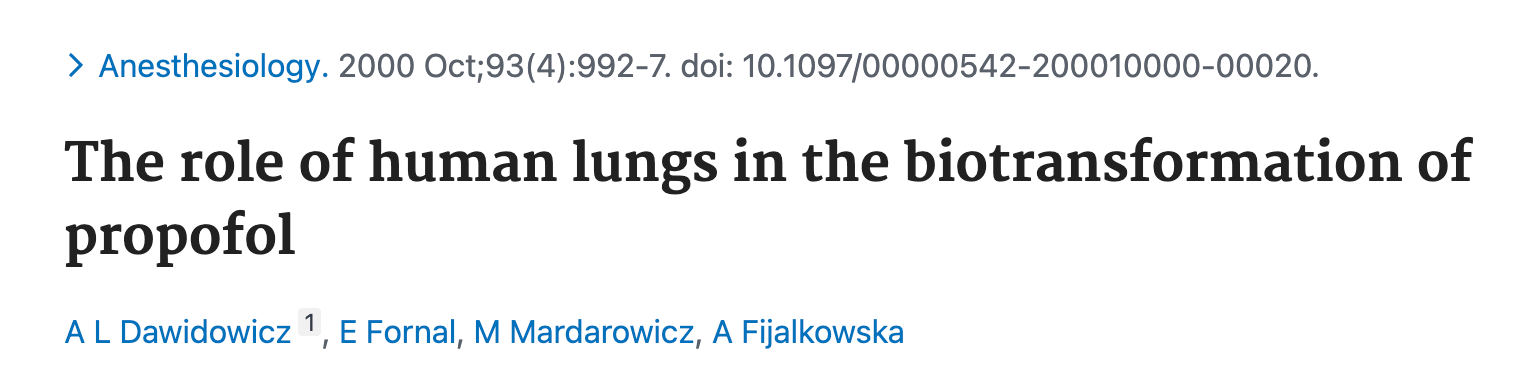
- Propofol is thought to have a degree of extrahepatic metabolism, at least some of which is likely to occur in the lung, although the degree and significance of this is debated
- Local anaesthetics are sequestered into the lung as the extravascular pH in the lung is less than that of the blood (ion trapping), providing some degree of protection against systemic toxicity
Amiodarone isn't really metabolised in the lung, but does accumulate there, and its build-up contributes to the pneumonitis and fibrosis associated with long-term amiodarone use.
How much drug is taken up by the lung?
- Fentanyl - 75%
- Lidocaine - 50%
- Diazepam - 30%
- Alfentanil - 10%
I'd be surprised if you need to know these numbers, they're just here for interest.
Any other pharmacokinetic roles played by the lung?
If the examiner mentions the word 'pharmacokinetic' you should immediately consider each of the following four categories:
- Absorption
- Distribution
- Metabolism
- Elimination
We've talked about metabolism, but there's also absorption and elimination of our volatile anaesthetic agents that we rely on so heavily to do our job.
Other molecules that are eliminated through the lungs include ethanol and acetone.
What are the neuroendocrine and secretory functions of the lung?
The lung is also responsible for secretion of a variety of biologically active substances.
- Serotonin
- Histamine
- Substance P
- Heparin
- Bradykinin
- Prostaglandins
- Nitric oxide
- Endothelin-1
Surfactant is probably worth mentioning too, from Type II alveolar cells.
What are the immune and barrier functions of the lung?
The lungs are enormous, warm, moist and highly oxygenated surfaces that provide an ideal breeding ground for nasties, so it makes sense there are some immune mechanisms in place to prevent infection.
- Particles over 5 μm in size struggle to change direction very quickly and so tend to crash into the mucosa of the nose, mouth and upper trachea
- Anything smaller than 5 μm will be inhaled into the distal airways
- Particles smaller than 2 μm will usually reach the alveoli
Big particles will trigger the cough or sneeze reflexes, but the smaller particles landing lower down need to be removed somehow.
- The conducting airways have a mucociliary escalator
Cilia waft a viscous layer of mucopolysaccharide up from the bronchioles to the pharynx at around 2 cm per minute, hopefully removing anything 5 μm and bigger from the equation.
Anything smaller than 2 μm will reach the distal airways, where there are several mechanisms in place to prevent infection and potential disaster.
- 80% of these will simply be exhaled again, but the remainder hang around potentially causing problems
- Alveolar macrophages will eat bacteria and other foreign particles.
- Epithelial cells and airway secretions provide antimicrobial substances including lysozyme, lactoferrin, defensins and nitric oxide
- Secretory IgA helps prevent pathogens from adhering to the respiratory epithelium
- IgG helps with opsonisation and phagocytosis in the lower respiratory tract
- Inflammatory cells can be recruited through the release of various cytokines, including interleukins and TNF
Tell me more about the mucociliary escalator
The upper airway is lined with a pseudo-stratified ciliated columnar epithelium.
- Goblet cells secrete a viscous mucopolysaccharide gel that acts like fly paper
- The bronchial glands then secrete a low-viscosity serous fluid that sits underneath and allows the thick gel to slide along the epithelium
- The cilia beat at 10 to 15 Hz and waft the mucus north to be coughed out or swallowed
Stuff that affects the mucociliary escalator:
- Smoking
- Cystic fibrosis
- Prolonged ventilation
- Critical illness
- Prolonged high inspired oxygen concentrations
- Atelectasis
- Infection
Are there any other protective features of the respiratory tract that you can think of?
- Warming and humidification of inspired gas protects integrity of epithelium
- Nasal filtration of pathogens and microbes
- Cough and sneeze reflexes to remove particulate matter
- Laryngeal closure to prevent aspiration and subsequent infection
- Epithelial tight junctions that maintain barrier integrity and prevent microbial translocation into the blood
What do you mean by vascular filter?
The pulmonary circulation takes the entirety of the cardiac output from the right heart, and passes it through an enormous network of exceedingly small capillaries.
This means that bits of gunk, clots, fat and other badness get lodged in those capillaries and eventually broken down.
Pulmonary endothelial cells are rather good at fibrinolysis.
Yes this means that tiny bit of the lung isn't being perfused as well, but it's a darn sight better than that bit of gunk getting lodged in the brain.
This system doesn't have a limitless capacity, and will encounter problems if the obstruction is big enough (it's called a pulmonary embolism).
What do you mean by vascular reservoir?
As we've just mentioned, the pulmonary circulation takes the entire cardiac output and passes it through an enormous network of low-pressure vessels.
As with all good, safe systems in the body, there is redundancy built in - this low pressure and highly elastic circulation is not fully perfused at rest.
As cardiac output increases during exercise or stress, the pulmonary circulation fills and distends, and the unrecruited vessels start to fill.
This prevents pulmonary pressures rising and overwhelming the relatively feeble right heart.
It also serves as a bit of a fluid 'capacitor' to ensure there is adequate venous return to the left atrium when you need it, but not too much when you don't.
Some useful numbers:
- Total pulmonary blood volume - around 450 - 500 ml (9% of blood volume)
- Mean pulmonary arterial pressure - around 15 mmHg
- Volume of blood participating in gas exchange at any given time - around 150 ml
Tell me about platelet production in the lungs
We think the lungs contribute a fair bit to thrombopoiesis, in large part because we know that around 50% of platelet production in mice occurs in the lung.
- Circulating megakaryocytes and proplatelets enter the pulmonary microcirculation
- Here they are stimulated to release platelets as they pass through
How clinically significant this is remains up for debate, but it is interesting.
You absolutely do not need to know any more than that for the FRCA examinations.
References and Further Reading

Other respiratory posts
 Anaestheasier ltd.
 Anaestheasier ltd.
 Anaestheasier ltd.
The Toolkits
Everything you need to smash the exams, all in one place.


Just a quick reminder that all information posted on Anaestheasier.com is for educational purposes only aimed at trained professionals, and it does not constitute medical or clinical advice.
Everything on this website is written by a trained (human) anaesthetist unless explicitly stated otherwise. LLMs may be used to assist with research and proofreading, but all writing is done by hand.
Anaestheasier should not be used as a definitive resource for academic writing; please reference original source material.
Anaestheasier® is a registered trademark.