Understanding Ke0
Once you understand this concept, it will hopefully make sense:
- Why propofol works in thirty seconds but midazolam takes a while
- When to choose alfentanil vs fentanyl
As always, we'll start simple and build from there.
You've just injected propofol
Hopefully into a vein, and as a result the plasma concentration of propofol skyrockets.
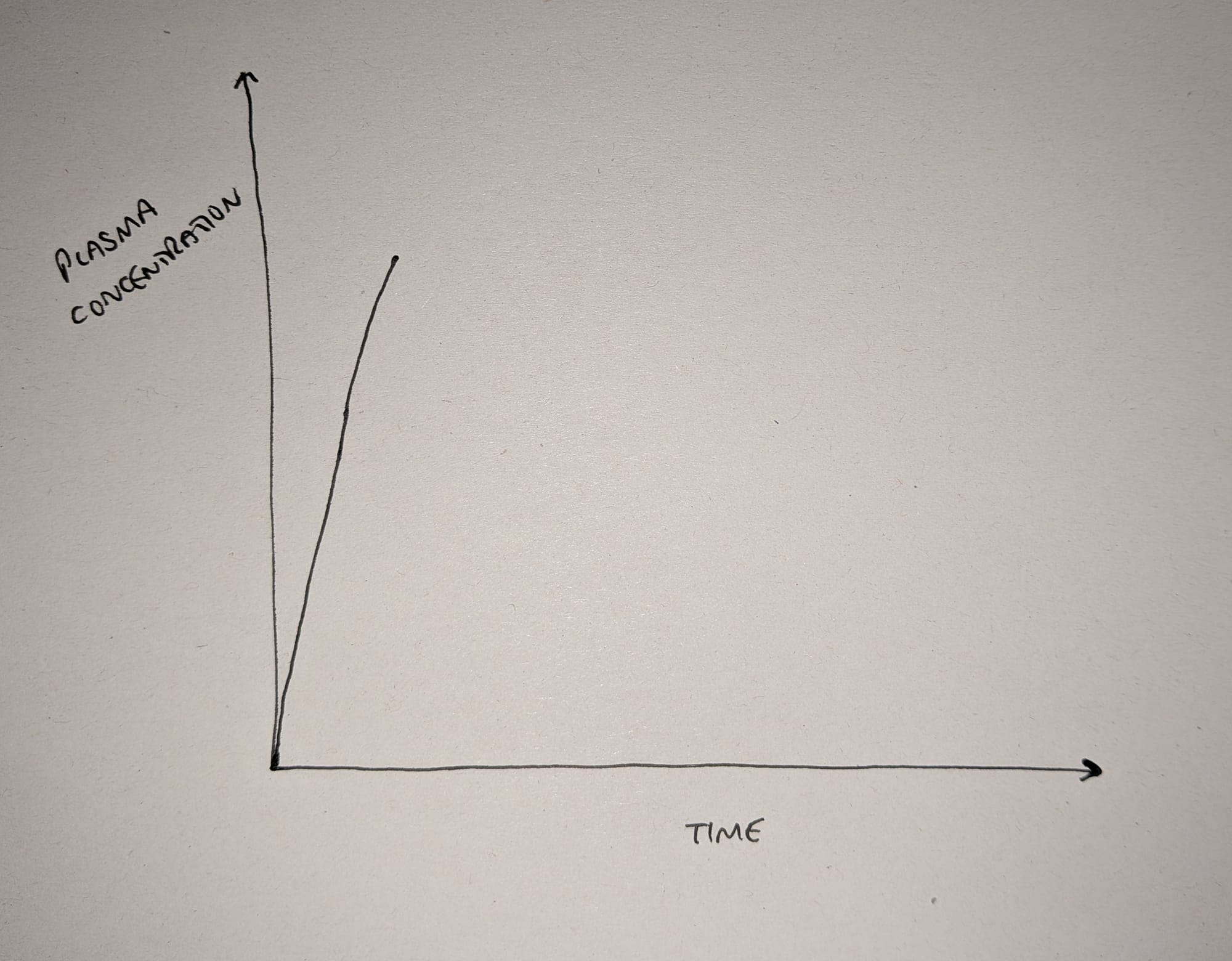
The extent to which this occurs of course depends on how much you give and how quickly, but either way - there's a lot more propofol in the plasma than there was before.
Then the plasma concentration starts to drop as two simultaneous processes occur:
- Redistribution of propofol into brain, muscle, fat and other organs
- Elimination of propofol from the blood by the liver, lung and kidneys
So the graph looks like this.
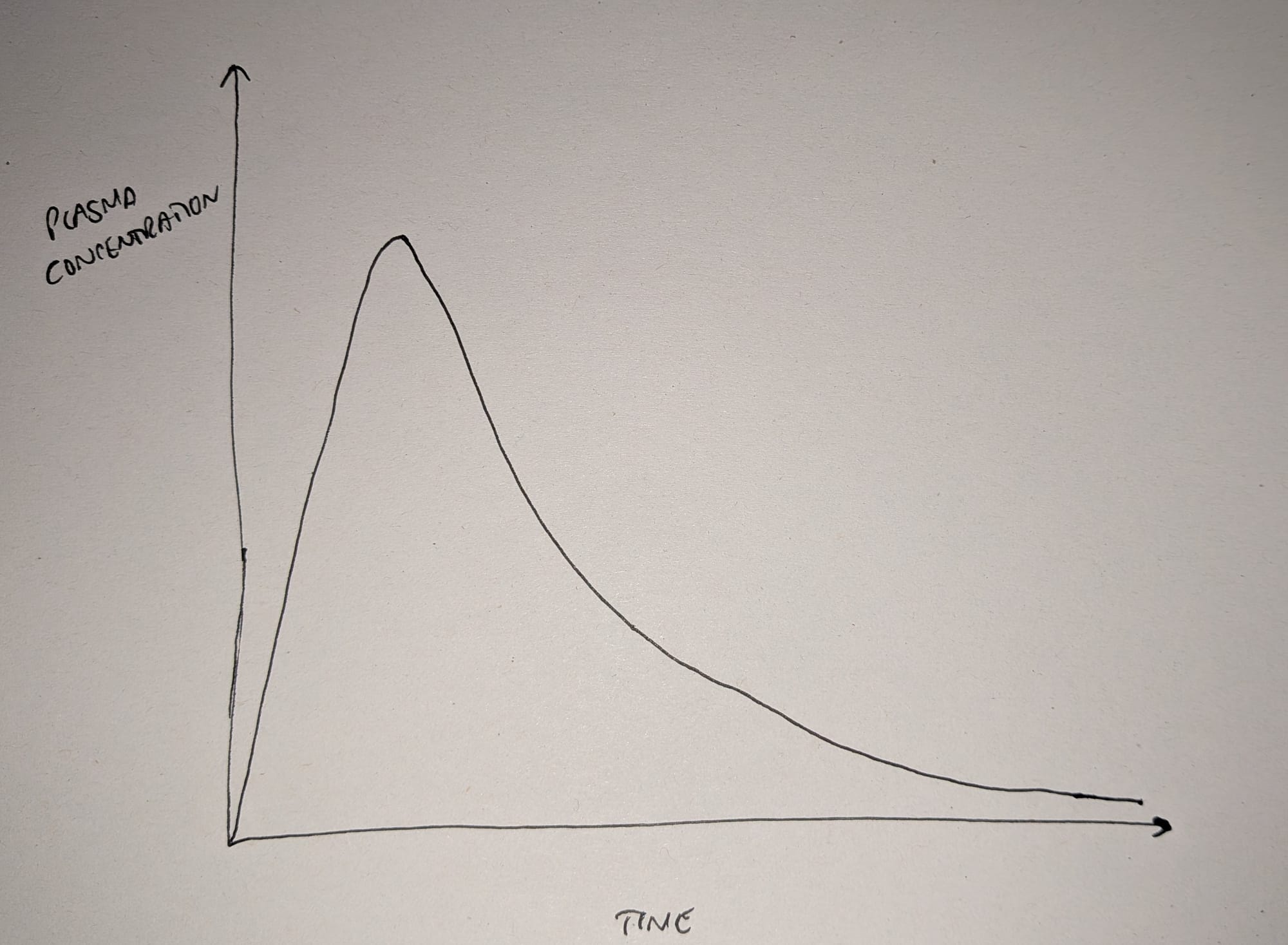
You can see the plasma concentration drops very rapidly at first and then more slowly over time.
This is because the concentration gradient between the plasma and the tissues is initially enormous, and then steadily declines as the drug redistributes.
Redistribution is responsible for the rapid initial drop in plasma concentration.
Eventually you're left with a very low plasma concentration that slowly gets whittled away by metabolism and elimination until there's none left.
Elimination is responsible for the much slower decline later on.
Simple enough so far.
Plasma concentration doesn't matter
This is quite clearly a lie - plasma concentration is enormously important - but what we mean by this inflammatory clickbait heading is that it's not the plasma concentration that determines the clinical effect of a drug.
This is why your patient takes a little while after you inject the propofol to actually fall asleep, because while their plasma concentration may be astronomical within seconds of administration, the effect site concentration lags behind.
So the graph looks like this.
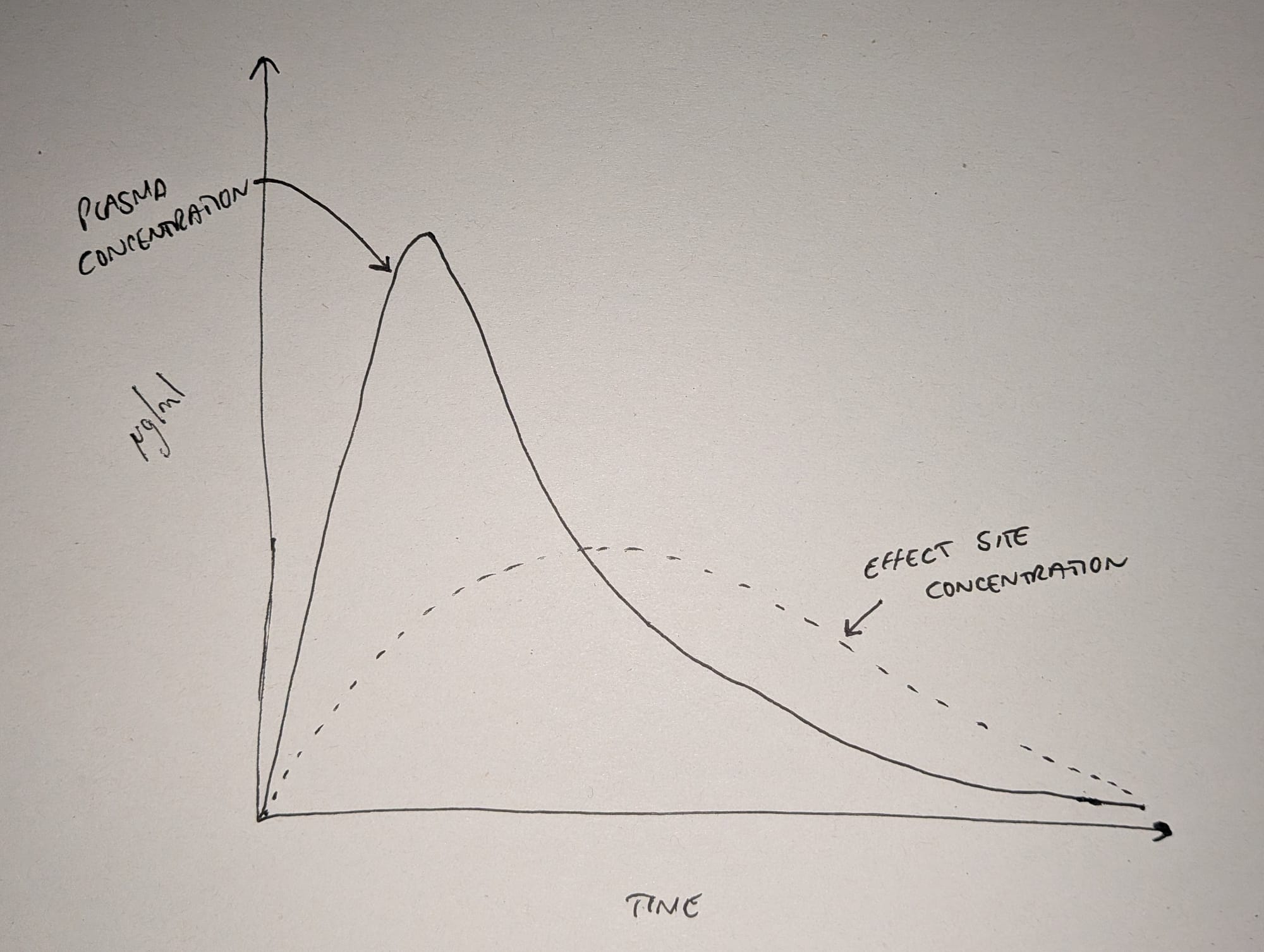
This lag happens because the propofol has to travel from:
- Arm to heart
- Heart to lung
- Lung to heart
- Heart to brain
- Plasma to extracellular fluid
- Extracellular fluid to neuron
And then find some GABA-A receptors to play with and knock the patient unconscious.
How quickly this happens depends on a multitude of factors.
What factors affect the speed of onset of propofol?
- Dose and speed of injection - bigger concentration gradient
- Cardiac output and cerebral blood flow - drug delivery to the brain
- Ke0 - a composite of multiple factors - see below
- Age - lower effect site concentration needed for unconsciousness
- Other drugs - premeds reduce the required concentration for unconsciousness
So what's Ke0?
This is a rate constant.
Rate constants describe how easily and quickly a drug moves between body compartments.
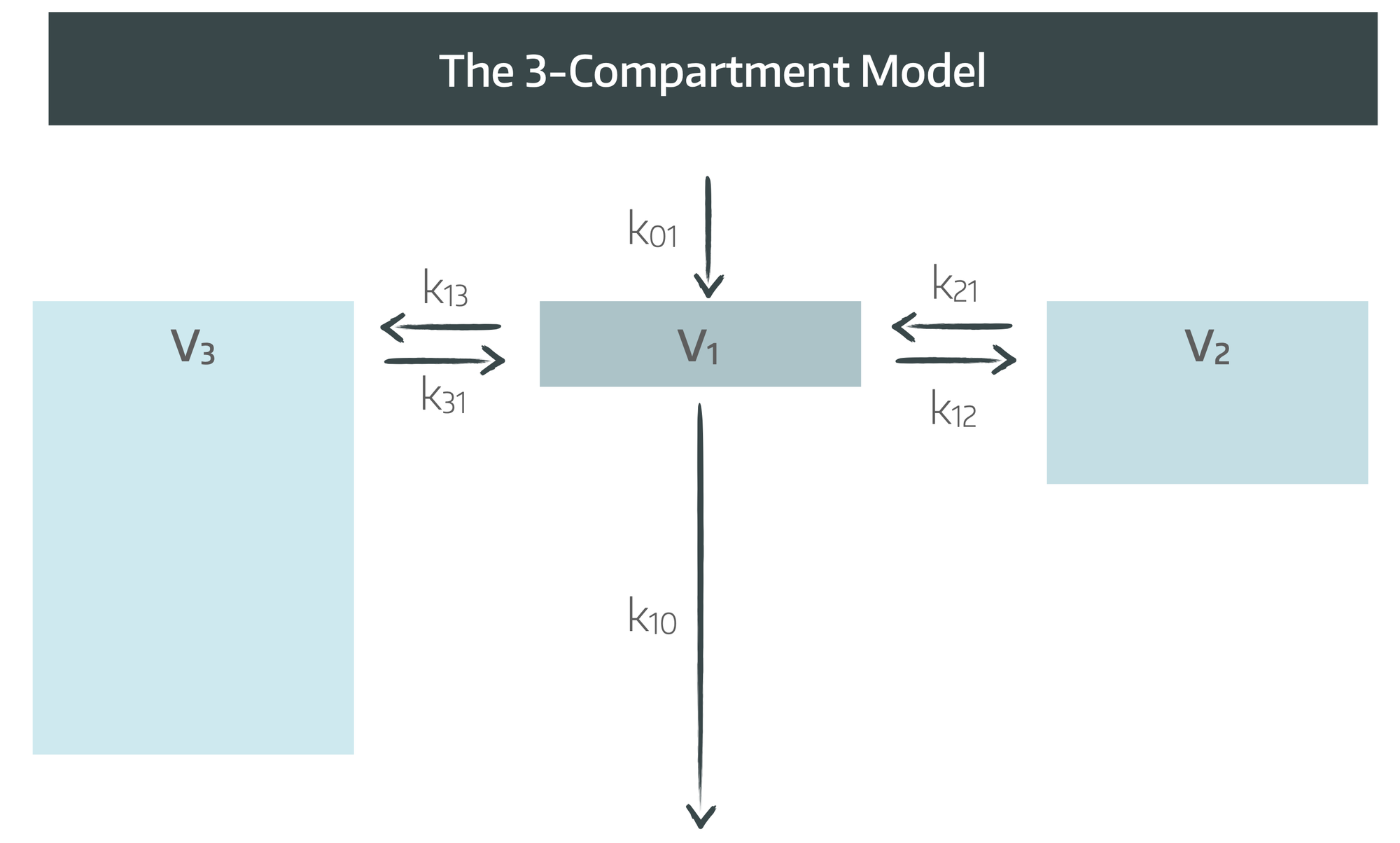
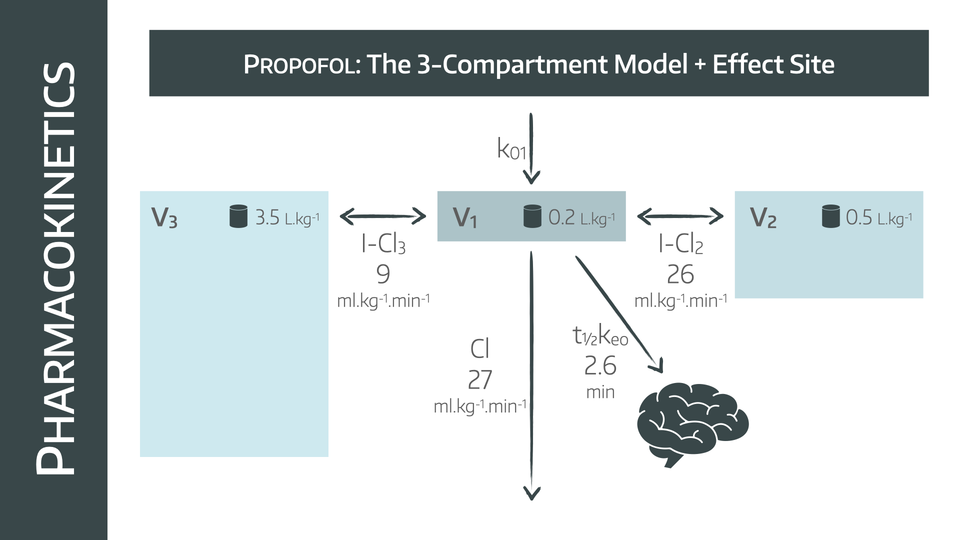
If you've never seen this image before, I'd recommend heading over to this post quickly to come up to speed:
 Anaestheasier ltd.
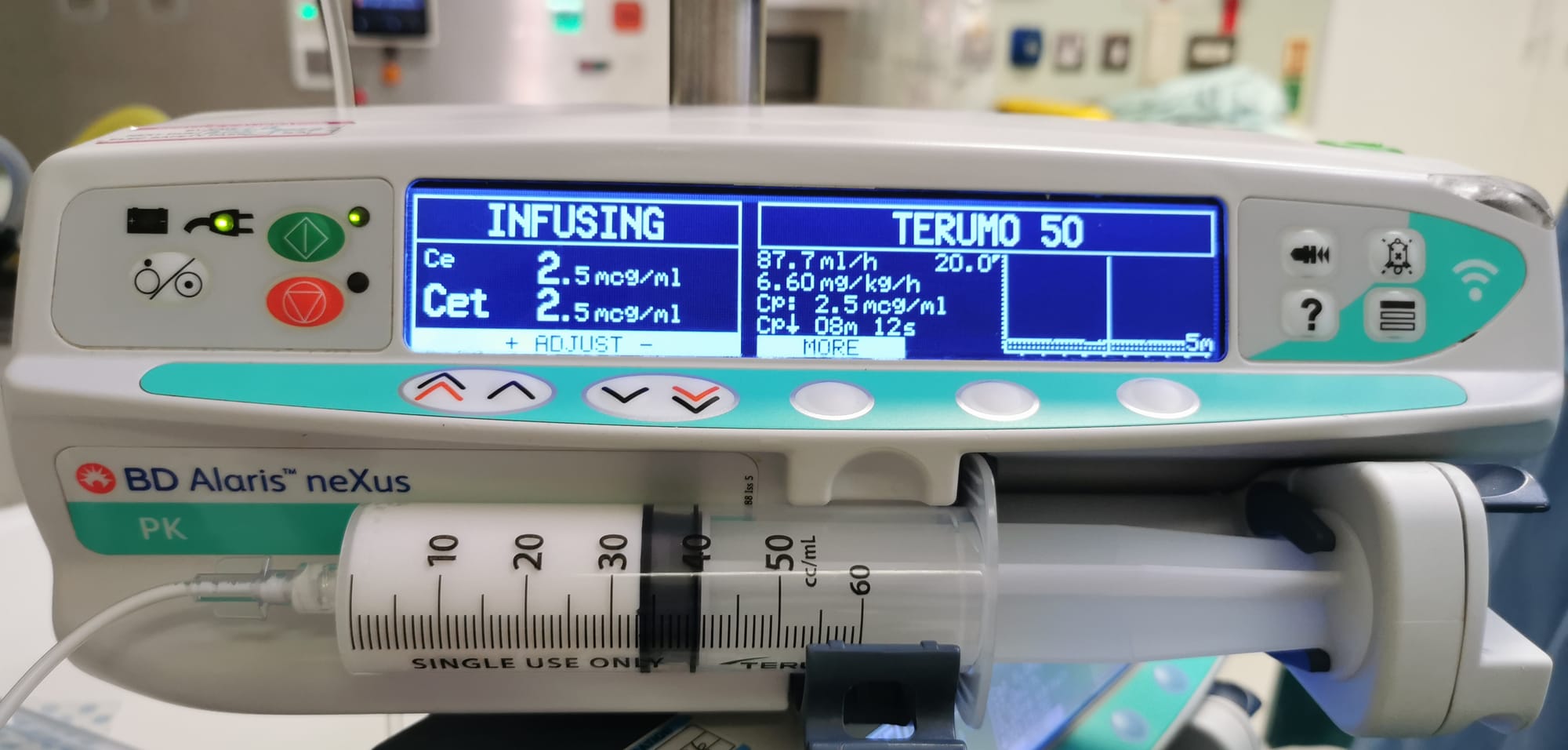
If you have seen this image before, then a quick reminder:
- K01 is you putting the propofol into the vein
- K12 is the propofol moving from the plasma to the highly vascular tissues
- K13 is the propofol moving from plasma to fat and muscle
- K31 is it moving back again
- K10 is the elimination from the body
You get the idea.
Each time the drug diffuses into a different compartment, we can describe its willingness to do so using a rate constant.
Now the effect site is a mythical magical place that isn't actually a discrete physical compartment, it's a mathematical fudge to explain why it takes longer for propofol to show its clinical effects than it does for the V1 concentrations to change.
This is why it gets labeled Ke0.
Every drug we give has a different degree of 'slipperiness' in how quickly it reaches the effect site, which dramatically changes how they behave.
Let's compare alfentanil and fentanyl
Finally, some actual clinical relevance.
Alfentanil has a Ke0 of 0.63 /min.
This means if you have a steady plasma concentration of 100 ng/ml, then the effect site concentration will initially* rise at 63 ng/ml/min.
Pretty damn slippery.
Fentanyl meanwhile has a Ke0 of 0.11 /min - which would mean an initial rise of 11 ng/ml/min in effect site concentration.
Less slippery.
This is why alfentanil has a time to peak effect of 1 - 2 minutes, while fentanyl takes a languishing 3 - 5 minutes to properly kick in.
Why does this matter clinically?
*The initial is in bold because it's 0.63 of the concentration gradient, which is 100 to start with. As soon as some drug has diffused across, the gradient drops slightly, and so does the rate. For the purposes of our understanding, this is academic.