Will's Transfer Checklist

Transfer time
Love them or loathe them, transfers are part and parcel of the job as an anaesthetist, so it's helpful to have a go-to checklist to reassure yourself that, when you hop in the back of a bandage bus, you've got everything you need.
I use an A-to-T checklist that I have assimilated over the last few years that seems to work well.
Needless to say, this is not the only transfer checklist, nor does it claim to be the best.
It's just the one I use every time, and it hasn't failed me yet, so I thought I'd share it.
Start with a sense check
A transfer is a procedure, with as much risk and physiological strain on the patient as an operation, so it deserves a good deal of respect and should only be considered if no other option is available.
Look at the patient in front of you, and ask yourself how you feel about the idea of transferring them.
- To begin with, the idea will be terrifying regardless of the condition of the patient
- After a few transfers you'll be able to decide whether you feel competent to transfer this patient, or whether it needs someone with more experience, particularly with children
- Over time you'll develop a gut instinct as to whether a patient is fit for transfer or not, regardless of who goes with them
If your gut is screaming not to get in the back of the ambulance with the patient, listen to it.
It might be that you're relatively new to this game, and the consultant will reassure you that you are up to the task and to crack on and trust your training, or you'll find someone else agrees that this isn't quite as simple as originally advertised.
Either way, listen to your instincts and get a second opinion if needed.
Now onto the checklist.
Airway
- Intubated?
- Size?
- Depth at teeth?
- How easy were they to intubate?
- What's your plan for if the tube falls out?
Your plan should never be to intubate on the journey. If you think there's a risk that the airway will deteriorate in transit, either they're not safe to transfer, or you secure it before you leave.
Breathing
- What ventilator settings are they on?
- Are you happy with those settings, and are they safe for transfer?
- Can you optimise their breathing any further before heading off?
- Do they have a chest drain?
- Do they need a chest drain?
VQ matching tends to get less efficient at 70 mph backwards on a stretcher, so if you're looking at a patient needing 90% oxygen to maintain their sats, have a serious think before committing to getting in the ambulance with them.
Circulation
- What IV access have you got?
- What infusions are they on?
- Have you got enough pumps, cables and battery life?
- Are they haemodynamically stable enough for transfer?
- Can you optimise their circulation any further before heading off?
- How will you handle their blood pressure and heart rate in transit?
- Do they have an arterial line?
- Would they benefit from one?
Well-filled patients travel much better.
Have a spare cannula with an extension on the right arm - this is the easier side to reach in a standard UK ambulance.
Monitoring invariably starts playing up in the back of an ambulance, so having two sources of blood pressure readings (cuff + art line) can be reassuring that you're actually looking at a sensible number.
Take at least double the amount of vasoactive infusions that you think you'll need.
Disability/neuro
- If not intubated, what's their current GCS?
- Is their GCS going to hold for the duration of the journey?
- If intubated, what are you using to keep them asleep?
- Have you got enough for the journey?
- What are their pupils doing?
- How often are you going to monitor pupils during the transfer?
- How are you managing their pain?
- Do you need to be thinking about raised intracranial pressure and neuroprotective ventilation?
Assume that your anaesthetic requirement is going to double in transit, and assume you're going to get stuck in traffic for at least two hours, and take that much spare sedation.
That way you won't be stuck at the side of the motorway working out how you're going to keep your patient asleep.
Exposure
- What's their temperature?
- Are they wrapped up warm enough for the outside bits of the transfer?
- Are their pressure points protected?
- Are wounds and burns adequately covered?
- Have they got other injuries to be aware of?
A sedated patient will drop their core temperature to 34°C after a few hours if you don't take measures to keep them warm.
Fluids
- Have you given enough fluid?
- Have you got a slow-dripping bag of fluids running?
- Have you got spare fluid for the journey?
- Do you need hypertonic saline or bicarbonate?
- What's their urine output?
- Are they catheterised?
- If not, should they be?
Glucose
- What was their blood sugar on the latest blood gas?
- Are they diabetic?
- Is blood sugar going to be an issue you have to manage?
Haematology
- Are they bleeding?
- What's their haemoglobin on the last blood gas?
- Are they going to need blood products on the transfer?
- Have they had or do they need tranexamic acid?
Infection
- When was their last dose of antibiotics?
- Do you need to take any with you?
Just in case
- Have you got your emergency airway equipment?
- Transfer bag?
- Emergency drugs?
Adrenaline, atropine, pressor, propofol, labetalol...
K (potassium)
- What was the potassium on the latest blood gas?
- Do you need to manage this in transit?
- If so, do you have all the bits you need?
Last gas
- When was the last blood gas?
- Have you done one immediately prior to transfer?
- Does anything need optimising before you head off?
Myself
Have I got:
- Jacket
- Money
- Phone
- Charger or battery pack
- Food
- Antiemetics
Clearly less of an issue for a transfer to CT and ITU than a four-hour interhospital journey.
Notes
- Have you got all the patient notes, scans and results you need?
- Have they been photocopied or transferred to the receiving hospital?
- Have you got transfer paperwork for documenting obs and interventions?
Oxygen
- What's the current oxygen requirement?
- How much oxygen are they going to need in transit?
Current oxygen requirement in litres/minute = (Minute ventilation x FiO2) + amount consumed to drive the ventilator.
Take at least double the calculated amount for the expected journey time, spread across two cylinders in case one cylinder fails completely.
I usually put patients requiring less than 50% oxygen onto 50% for the journey just for a bit of a safety net.
As soon as you get in the truck, switch over to their enormous supply and conserve your oxygen for the other end.
Phone calls
- Have you discussed with the receiving department and are they aware of the patient?
- Have you phoned the next of kin to ensure they're up to speed with what's going on?
- Do you need to call anyone else?
- Have you got the number of your contact at the receiving hospital?
- Who will you call in an emergency?
Questions
- Does anyone on the team have any questions or concerns before transfer?
Rocuronium
- When was the last dose of rocuronium?
- Do you need to give a dose now?
- Have you got enough for the journey?
For most ventilated patients, you'll make your life substantially easier if you give roc just before you leave, and again just before you arrive.
Of course this doesn't apply to every patient, but it takes the potential 'patient-got-too-light-and-coughed-the-tube-out' disaster out of the equation.
Suction
- Have you suctioned the airway before leaving?
- Have you got suction catheters with you?
- Have you got a portable suction device?
- Does the ambulance have suction?
Suction is the one thing that can't be improvised with another piece of kit, so be sure to double-check it's working before you leave.
Toilet
- Have you been to the toilet?
Other miscellaneous transfer top tips
If you need to do something, stop the truck
It's so tempting to just fiddle with this, or tweak that, as you're cruising in the outside lane on the motorway.
You put yourself at significant risk by standing up and trying to intervene while the ambulance is moving.
If a problem arises and you can't solve it from your seat (you should have an extension line and the ventilator should be within reach, and the monitor visible), then you should tell the driver to pull over so you can sort the issue out before you set off again.
Think of what might go wrong, and what you're going to do about it
Bronchospasm, extubation, cardiovascular collapse, coning - the list is enormous - but if you can think of a few things in advance, and plan what you would do should that scenario occur, you'll be grateful that you did when the time comes.
We also all know that if you think and plan for something bad, then you ward off evil spirits and it won't happen.
Tell the driver to brake gently
Ambulances have famously terrible acceleration, but their brakes are reassuringly useful.
This is bad news for a patient facing backwards with raised intracranial pressure, however, as overzealous braking will surge blood into their head and could do some serious damage.
It's not a race, smooth is better than fast, and steady on the brakes please!
Know where your airway kit is
It's all very well saying 'if the tube falls out I'll put an igel in and keep going' but do you actually know where this magical igel is?
When you step into the back of the ambulance, ask the team where the immediate airway kit is, including the BVM, and you'll be glad you did should the situation arise.
Keep cycling through ABCDE
- Airway still okay?
- Breathing unchanged?
- Blood pressure stable?
- Asleep enough?
- Access intact?
Repeat this until arrival at the destination.
Don't wait for an alarm to go off, you'll spot problems much sooner with intentional checking.
Adapt at will
As I said before, this is just my way of doing it, not necessarily the best.
But it works.
I mentally blast through this anytime I'm about to transfer an intubated patient in any capacity, whether it's to another trust, department or even to another bedspace in intensive care.
It may feel like overkill, but if you get into the habit of doing it every time, you get quicker and quicker and it becomes almost automatic.
It also takes a lot of that 'have I thought of everything' cognitive burden off your shoulders, because you know the checklist has it covered.
What's your routine?
We'd love to hear your little tips and tricks for a successful transfer, so that we can share the wisdom with our community of anaesthetists.
Please feel free to comment or email us at anaestheasier@gmail.com.
References and further reading
 ICS
ICS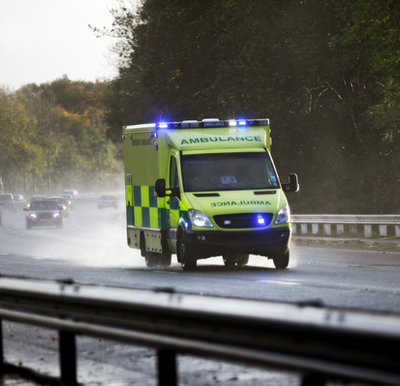
Other transfer posts
 Anaestheasier ltd.
 Anaestheasier ltd.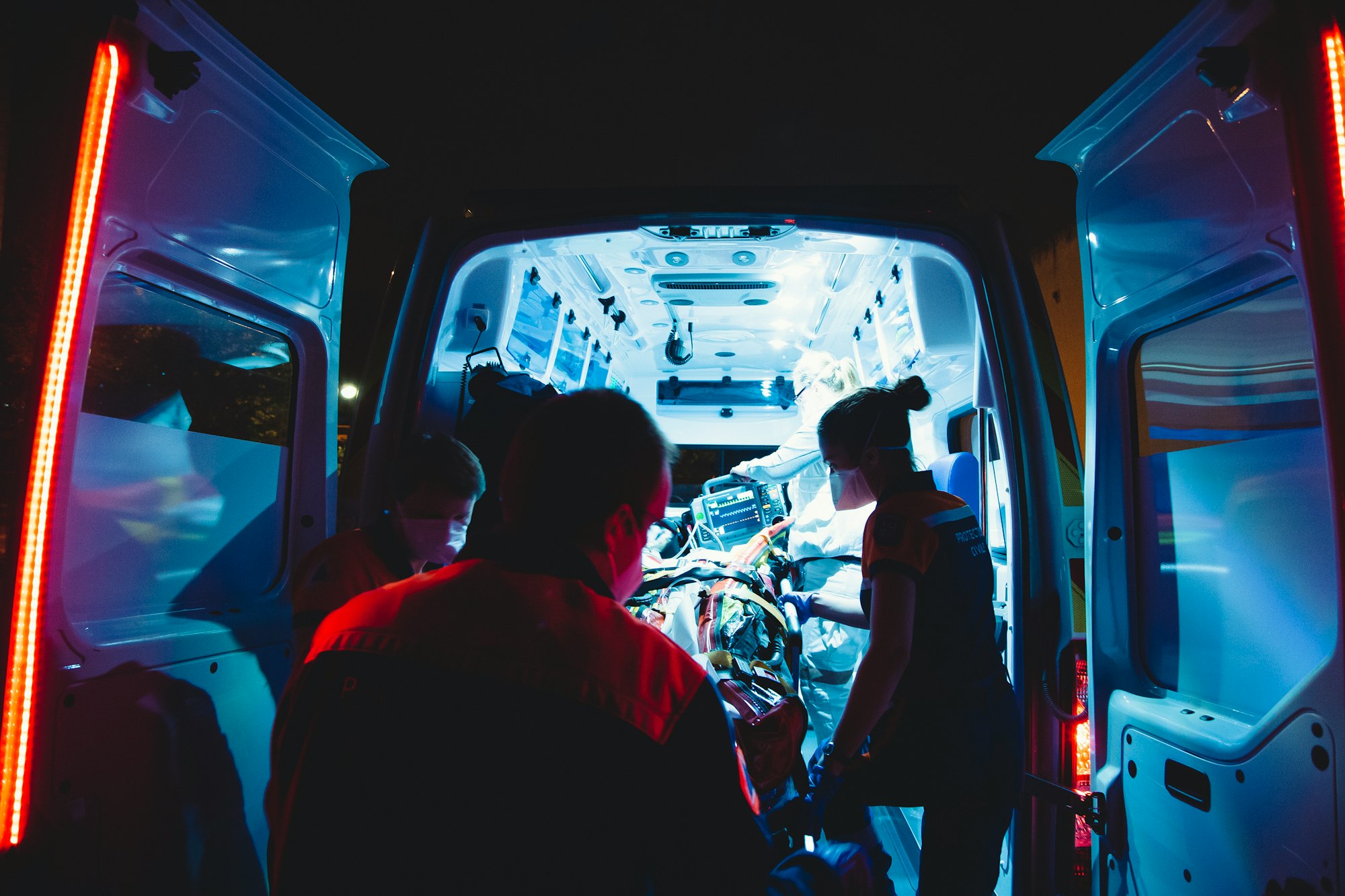
Just a quick reminder that all information posted on Anaestheasier.com is for educational purposes only aimed at trained professionals, and it does not constitute medical or clinical advice.
Anaestheasier should not be used as a definitive resource for academic writing, please reference original source material.
Anaestheasier® is a registered trademark.