Femoral Triangle
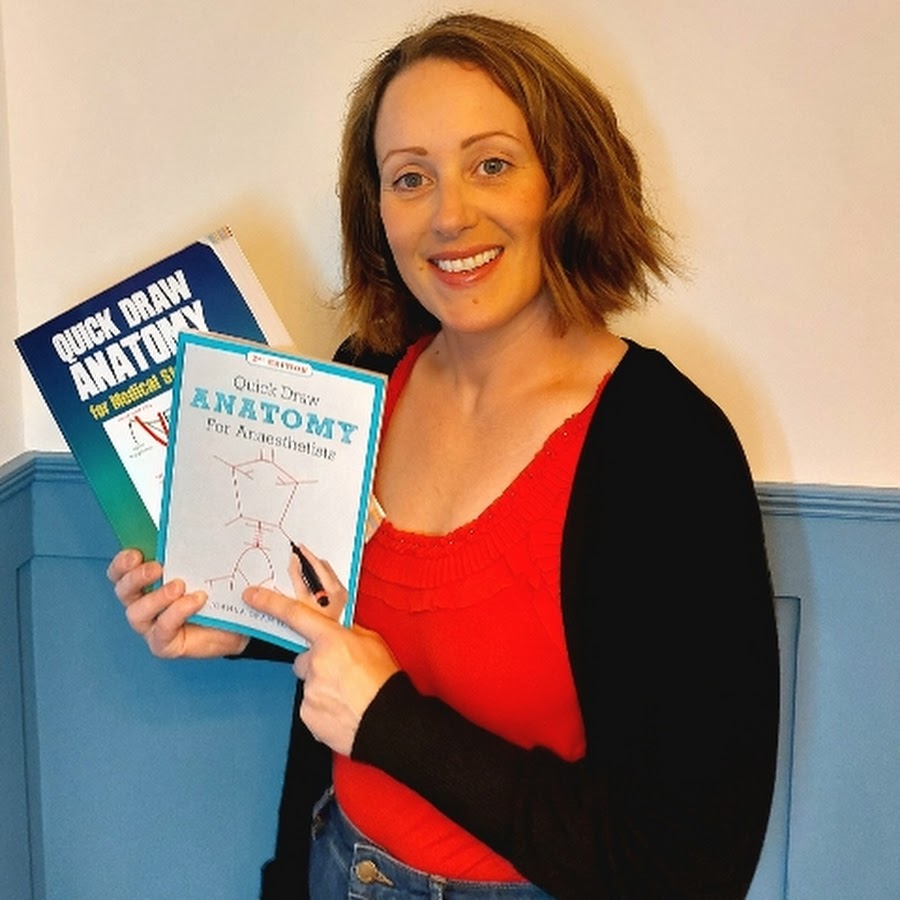
The amazing Dr Fox has kindly given us permission to share her wonderful quick draw anatomy videos with our readers.
We highly recommend you grab a copy of her book - link is below.
(This is not a sponsored post, nor do we here at Anaestheasier receive any commission from you purchasing through the link below - all proceeds go to the Author!)
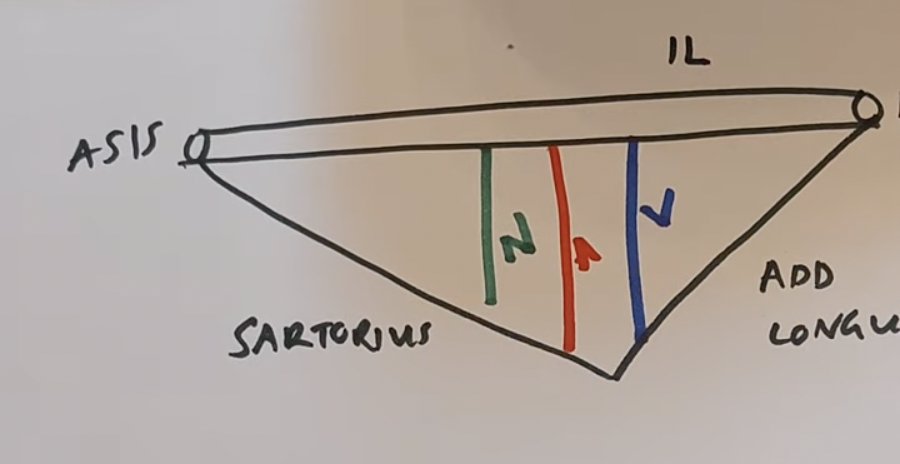
The Femoral Triangle
What are the boundaries of the femoral triangle?
- Superior - inguinal ligament (ASIS to pubic tubercle)
- Lateral - sartorius muscle
- Medial - adductor longus muscle
- Roof - areolar tissue, fascia lata, subcutaneous tissue and skin
- Floor - iliacus, psoas and pectineus muscles
What are the contents of the femoral triangle?
- Femoral canal - lymphatics
- Femoral sheath - vein, artery
- Femoral nerve invested in fascia iliaca
Why are the femoral vessels of relevance to the anaesthetist?
Femoral vein
- Central venous access for venous catheters and haemodialofiltration
- Also used for interventional radiology and IVC filter instertion
Femoral artery
- Arterial blood gas sampling
- Invasive blood pressure monitoring
- Used for angiography
- Insertion of intra-aortic balloon pumps
What are the indications for femoral nerve block?
- Fractured shaft of femur
- Perioperative analgesia for knee surgery and hip surgery
Femoral nerve block is used less frequently in modern anaesthetic practice as the dense motor block makes it less suitable for enhanced recovery and day case procedures.
Other blocks such as fascia iliaca and PENG blocks are being used with increasing frequency.
What does a femoral nerve block cover?
- Anterior thigh
- Medial leg - via saphenous nerve
- Knee joint
Does not reliably block obturator nerve, hence not recommended for hip surgery.
What are the complications of femoral nerve block?
- Failure of procedure
- Vascular puncture
- Haematoma
- Nerve injury
- Local anaesthetic systemic toxicity (LAST)
- Infection
Here are our other anatomy posts

Here's our full post on femoral nerve blocks
 Anaestheasier ltd.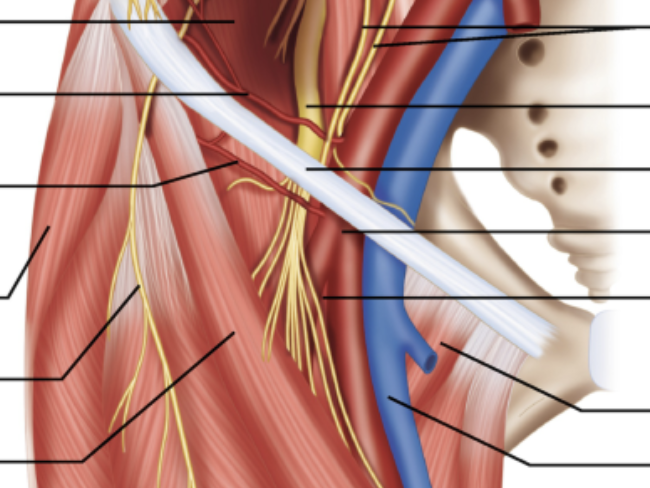
Buy her book here
About the Author

Dr Joanna Oram Fox graduated in medicine from Cardiff University in 2007.
She obtained certificates of clinical excellence in medicine, surgery and general practice and won the prestigious Willie Seager surgery prize.
Dr Fox worked four general years as a junior doctor covering medicine, surgery, obstetrics and gynaecology, paediatrics and emergency medicine. During this time she worked in Australia and developed an interest in anaesthetics.
She commenced anaesthetic training in 2011. Dr Fox has been a Consultant Anaesthetist since 2018 and works in Cardiff and Vale NHS trust.
Find her YouTube Channel here

Here's the toolkit
 Anaestheasier ltd.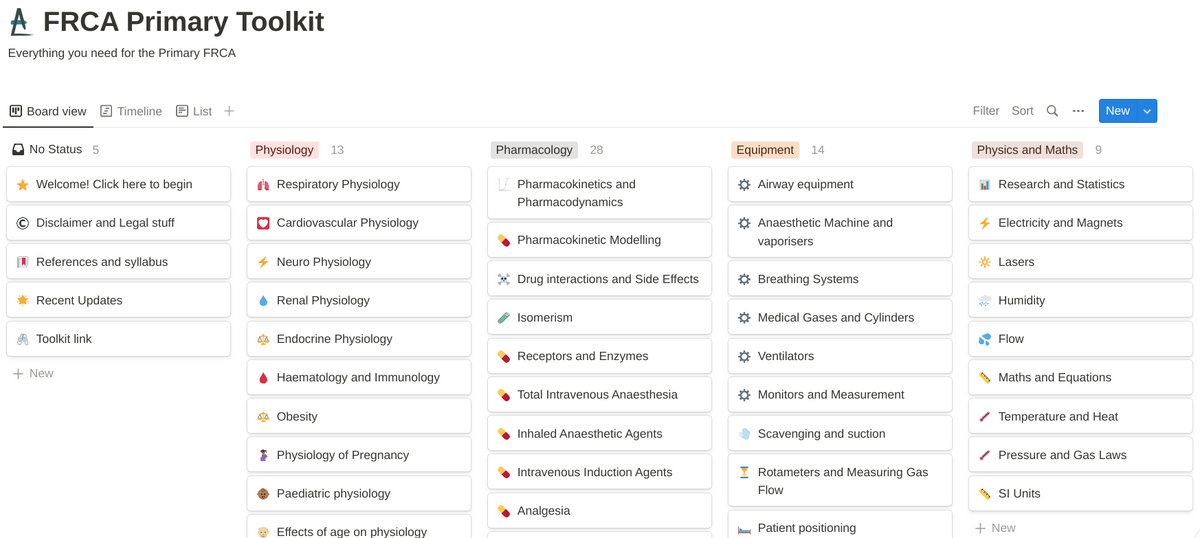
Just a quick reminder that all information posted on Anaestheasier.com is for educational purposes only, and it does not constitute medical or clinical advice.
Anaestheasier® is a registered trademark.