Understanding the surgical stress response

"So why do we give steroids at induction?"
'Antiemetic right?'
"Yep, and why else?"
'Ah, for the surgical stress response.'
"Exactly, and what is that?"
'...err...'
TLDR
- The surgical stress response is an adaptive neuroendocrine, inflammatory, and metabolic survival response to trauma or tissue injury
- The aim is to maintain cardiovascular stability, tissue perfusion and ensure there is enough substrate for metabolism in the blood
- You want enough of a stress response but too much
- Anaesthesia can help reduce the effects of this response but not abolish them completely
- Patients with adrenal suppression need a bit of help
What is the surgical stress response?
It makes sense that when stabbed, stamped on or sliced, the body might mount some sort of coordinated survival response to try and reduce the chances of dying by improving tissue perfusion and metabolic substrate mobilisation.
The surgical stress response is a physiological response to trauma, composed of:
- Neuroendocrine
- Inflammatory
- Immune and
- Metabolic components
These components are activated simultaneously and overlap with each other to produce a variety of physiological changes.
Step 1 - activation of the nervous system
Surgeon goes slicey dicey, and the peripheral nociceptors start firing off action potentials to alert the brain to the tissue damage.
- More slicey, more signals
These signals travel through Aδ and C fibres to the spinal cord, brainstem and higher cortical centres (that is, unless you've done a spinal or regional block), and trigger the brainstem to start engaging autonomic responses, ultimately resulting in the adrenal medulla being brought into action.
What are the autonomic effects of the surgical stress response?
- Tachycardia
- Increased myocardial contractility
- Peripheral vasoconstriction and redistribution of blood flow
- Increased circulating catecholamines
General anaesthesia will remove the conscious perception of pain, but does not necessarily remove the autonomic, inflammatory and endocrine responses to surgical stimulation.
Step 2 - activation of the hypothalamus
This nervous activity also triggers the hypothalamus to kick an endocrine reply into gear.
All hail the hypothalamo-pituitary-adrenal axis.
- Surgical stimulation causes the hypothalamus to release corticotropin-releasing hormone (CRH) and vasopressin (ADH)
- CRH then triggers the anterior pituitary to release adrenocorticotropic hormone (ACTH)
- ACTH tells the adrenal cortex to manufacture and release cortisol
There is then usually a negative feedback loop where cortisol inhibits further CRH and ACTH release, however during severe physiological stress this is rather overridden and enormous quantities of cortisol get released into the circulation.
What does cortisol do?
- Helps maintain vascular responsiveness to catecholamines
- This is why we give hydrocortisone in severe septic shock
- Increases gluconeogenesis
- Modulates inflammation
The overall effect is one of maintaining cardiovascular stability, which is why patients with adrenal insufficiency can become wildly unstable during surgery if they don't receive steroid replacement.
What role does the RAAS play?
Surgical stress also activates the renin-angiotensin-aldosterone system, as a result of:
- Increased sympathetic activity
- Hypovolaemia
- Hypotension
In short, reduced renal perfusion and lower sodium delivery to the macula densa convinces the kidneys they need to increase blood pressure and retain salt and water.
So they stimulate renin secretion from juxtaglomerular cells.
- Renin converts angiotensinogen from the liver into angiotensin 1
- ACE converts angiotensin 1 into 2
- This then stimulates aldosterone release from the zona glomerulosa of the adrenal cortex
The physiological impacts of this cascade are as follows:
- AT2 causes vasoconstriction to maintain a perfusing blood pressure
- Aldosterone increases sodium reabsorption, to increase fluid retention
- ADH then triggers even more water retention
This means a degree of oliguria during a major operation is an entirely normal response to the surgical stimulus.
The opinion is rather divided on whether we should be chasing certain urine outputs during surgery with no clear consensus on what the 'magic' number should be.
As a sensible rule of thumb, if they're behaving like a euvolaemic patient with an adequate perfusing pressure, don't flood them with fluid to chase a urine output, and try not to stress too much about how much they're passing until the surgeon has stopped slicing.
Summarise the hormonal changes seen during the surgical stress response
This feels like prime CRQ fodder so I thought I'd package the information in a CRQ-friendly format:
- Cortisol - gluconeogenesis, vascular responsiveness
- Adrenaline and noradrenaline - cardiovascular and metabolic effects
- Glucagon - increases hepatic glucose production
- Insulin - reduced sensitivity causing 'stress hyperglycaemia'
- Growth hormone - lipolysis
- ADH - water retention, vasoconstriction
- Aldosterone - sodium and water retention
All makes sense really in the context of a wounded animal that is primarily concerned about bleeding to death.
Step 3 - the inflammatory response
Unsurprisingly as soon as you start causing tissue damage, it responds by trying to heal itself.
To do this, it sets off the inflammatory cascades that you know and love from first year med school.
- Surgical trauma causes release of damage-associated molecular patterns (DAMPs)
- These activate neutrophils, macrophages and induce release of inflammatory mediators including IL 1β, IL 6 and TNF α
This sets off an array of inflammatory processes around the body, with a multitude of physiological effects:
- Amplifies the HPA axis response described above
- Increases endothelial permeability
- Activates the coagulation cascade
- Increases hepatic production of acute-phase proteins such as CRP
The take-home message for this section is that post-operative inflammation is necessary for healing, but you don't want too much.
This is why immediately post-op patients can be febrile, tachycardic and have raised inflammatory markers without there being any infection to blame.
Step 4 - the metabolic consequences
Your patient has been wounded. Your patient's body has no idea why, or that this is hopefully in its best interests.
All it knows right now is that it might bleed to death, and that it's all hands on deck to prevent this from happening.
Now, mounting an enormous stress response is rather energetically expensive.
In order for all of the above survival mechanisms to function, they're going to need a lot of fuel, so part of the surgical stress response includes mobilising vast quantities of metabolic substrates to ensure there's enough energy to go around.
This is why you see:
- Increased hepatic gluconeogenesis
- Increased glycogenolysis
- Increased skeletal muscle proteolysis
- Increased lipolysis
What are the consequences of these metabolic changes?
The extra sugar in the blood leads to:
- Increased risk of infection
- Impaired wound healing
- Osmotic diuresis
- Trickier blood sugar control
Increased muscle breakdown leads to:
- Loss of muscle mass
- Deconditioning, particularly in already frail patients
This is why we like to:
- Minimise preoperative fasting
- Encourage early postoperative oral intake
- Mobilise and get physio involved ASAP
- Monitor blood sugar closely particularly in diabetic patients
Is it always good?
Ah, no.
See there's the issue. There are adaptive responses, which are useful and helpful for survival, and then there are maladaptive responses, which do more harm than good and make everything a whole lot worse.
For example, if you call the fire brigade when your house is on fire, it's adaptive for them to turn up and use water to put the fire out.
It becomes maladaptive when the fire brigade continue to apply so much water to the now extinguised housefire that it ruins the floorboards, walls and foundations forever and makes the place unlivable.
The stress response is essential for maintaining homeostasis after injury, but prolonged activation leads to badness.
The adaptive bits
- Increased cardiac output
- Substrate mobilisation
- Corisol release
- Activation of tissue repair
The maladaptive bits
- Excessive catabolism
- Hyperglycaemia
- Insulin resistance
- Immunosuppression
- Thrombosis
- Organ dysfunction
What factors determine the magnitude of the stress response?
- How big the operation is (how much tissue damage)
- How long the operation lasts
- Blood loss
- Hypovolaemia
- Physiological instability
- Patient factors - malnutrition, diabetes, chronic inflammation, frailty
- Analgesia and anaesthesia
The quality of your anaesthetic will influence the extent and severity of the patient's surgical stress response.
What can the anaesthetist do to reduce the surgical stress response?
A perfect FRCA question that can be broken down into preoperative, intraoperative and postoperative components:
Preoperative
- Identify patients at risk of adrenal insufficiency, and those who are particularly frail
- Optimise diabetic control and nutrition where possible
- Minimise fasting and dehydration
- Identify those on steroids and establish a perioperative steroid management plan
Intraoperative
- Ensure adequate analgesia and anaesthesia to reduce nociceptive response to surgery
- Use regional anaesthesia where appropriate
- Maintain normothermia
- Maintain euvolaemia and euglycaemia
- Avoid hypoxia and hypotension
- Avoid blood transfusion where possible
Postoperative
- Multimodal analgesia and antiemetics
- Early mobilisation
- Early oral intake
- Continue steroid replacement where needed, at an appropriately escalated dose
- Identify and treat postoperative complications promptly
Minimally invasive surgery is an answer to 'what factors can reduce the surgical stress response' but not 'what can the anaesthetist do'.
What effect are my drugs going to have?
Based on what we've talked about already, it should hopefully now make sense that our anaesthetic cocktail can have quite an impact on this stress response, for better or worse.
Here are some examples.
Propofol
- Reduces the sympathetic response
- Reduces circulating catecholamines
- Doesn't reliably abolish the cortisol or inflammatory response
- Can have profound impacts on haemodynamics and therefore RAAS activation
Etomidate
Rarely used but exam fodder precisely because of its endocrine impact.
- Directly inhibits adrenal steroid synthesis by inhibiting 11β hydroxylase
- A single dose will suppress cortisol synthesis for several hours
- This can be important in critical ill or septic patients, and those with adrenal insufficiency
Ketamine
- Indirect sympathomimetic effects will increase circulating catecholamines
- Haemodynamic stability will reduce RAAS activation
- Slightly anti-inflammatory
Realistically you're not going to make your decision on induction agent based on the potential surgical stress response mounted by the patient, but it's nice to know what to expect.
Volatiles
- Reduces CNS response to surgical stimulation
- Some impact on neuroendocrine response but not inflammation
TIVA might produce less postoperative inflammation but whether this translates into meaningfully better clinical outcomes is hard to determine.
Opioids
- Reduce sympathetic activation by reducing perception of pain
- Remifentanil in particular gives reliable, titratable suppression of autonomic responses to surgical stimulation, hence the bradycardia
You're using them for pain, but they'll probably help reduce the stress response as well.
But then again, you don't want to give loads of side-effect-inducing opioids when you could be giving the exam buzzphrase of "multimodal analgesia including regional where appropriate".
Long story short - remi is awesome.
Regional and neuraxial anaesthesia
This post presents a very compelling argument for using regional anaesthesia wherever possible.
By blocking the afferent neural signals and sympathetic efferents, you can seriously reduce the extent of the surgical stress response and all of its adverse effects.
Just note they won't necessarily prevent inflammatory changes and HPA activation, so it doesn't completely solve your problem.
And don't forget the importance of haemodynamic stability, which neuraxial anaesthesia can make more difficult.
The big steroid question
Let's be honest here - the answer is usually 6.6 mg dexamethasone at induction.
- It's antiemetic
- It helps stimulate appetite after the operation
- It's anti-inflammatory
- It has lots of useful glucocorticoid activity
What's not to love?
That's all well and good, but it's not a one size fits all recipe, especially when you're dealing with patients taking regular steroids or who have adrenal insufficiency.
And that's without mentioning the side effects.
What are the side effects of glucocorticoids?
- Hyperglycaemia and muscle wasting
- Hypertension and fluid retention
- Poor wound healing
- Impaired immunity
- Thinning of skin
- Osteoporosis
- Weight gain
- Adrenal suppression
Your single dose of dex isn't going to trash their bones or make them chronically hypertensive, but it's important to understand these are not benign drugs.
Giving steroids to patients with normal adrenals is a completely different game to replacing cortisol in patients with insufficiency.
Why do some patients need steroid replacement?
- There is normally an increase in endogenous cortisol release during times of physiological stress
- Patients with adrenal insufficiency can't mount an adequate response
- This can lead to adrenal crisis if you don't do it for them
This is the document we're supposed to follow
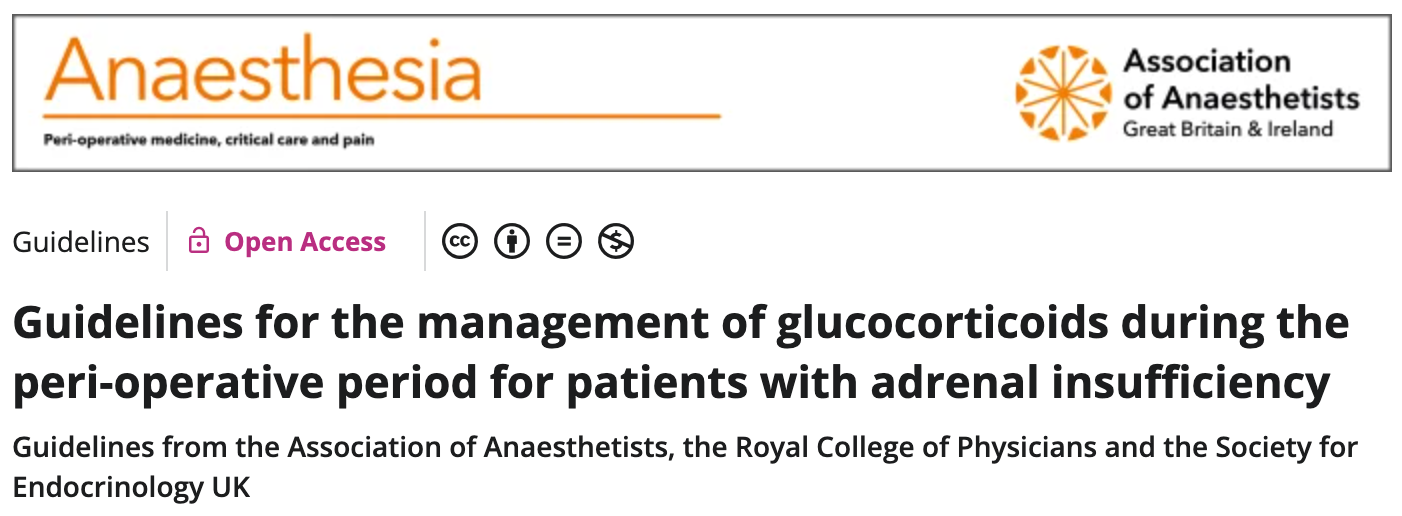
What is the recommended steroid replacement regimen?
For adults with adrenal insufficiency:
- 100 mg IV hydrocortisone at induction
- Then 200 mg IV hydrocortisone over 24 hours
- Continue at 200 mg/24 hours until able to take oral meds
- Then take normal oral glucocorticoids at double dose for 24-48 hours*
- Then return to normal dose
The decision of how long to do this for is individualised to the patient depending on their recovery, complications and severity of disease.
Why hydrocortisone?
- Hydrocortisone is very similar to cortisol
- It has glucocorticoid and some mineralocorticoid activity
- It has shorter duration of action than dexamethasone
- It can be given IV
- The continuous infusion allows for steady, continuous glucocorticoid maintenance rather than surges in plasma concentration
Dexamethasone has negligible mineralocorticoid activity, making it inappropriate for cortisol replacement.
How do the different steroids compare?
Here are the commonly quoted equivalent doses:
- Hydrocortisone 20 mg
- Dexamethasone 0.75 mg
- Methylprednisolone 4 mg
- Prednisolone 5 mg
This is commonly examined at a Primary FRCA level.
What is adrenal crisis?
When there's not enough cortisol around, there is progressive loss of vascular responsiveness to catecholamines.
If you've given propofol or done a spinal, you'd rather like your patient to be able to vasoconstrict in response to some adrenergic stimulation to prevent their blood pressure from crashing.
A profound lack of cortisol can make this very difficult to manage, and eventually lead to cardiovascular collapse.
Patients can present with:
- Severe refractory hypotension
- Tachycardia
- Hypoglycaemia
- Hyponatraemia
- Nausea and vomiting
- Abdominal pain
- Altered mental status
Not necessarily easy to spot when it could also be bleeding, sepsis, anaphylaxis...
Which patients are at risk of adrenal crisis?
Categorise this answer into three groups:
- Those with primary adrenal insufficiency
- Those with secondary adrenal insufficiency
- Those with iatrogenic adrenal insufficiency
Primary adrenal insufficiency includes:
- Addison's
- Congenital adrenal hyperplasia
- Previous bilateral adrenalectomy (somewhat less common)
Secondary adrenal insufficiency includes:
- Pituitary disease
- Traumatic brain injury
- Previous pituitary surgery or radiotherapy
Iatrogenic adrenal insufficiency is basically just chronic steroid use, defined as:
- 5 mg or more of prednisolone per day (or equivalent)
- For at least four weeks
Remember that HPA axis suppression can continue for a while even after steroids have been stopped.
How do I manage an adrenal crisis?
- Hydrocortisone 100 mg IV or IM
- 200 mg/24 infusion or 50 mg bolus every six hours
- IV fluid resuscitation
- Correct hypoglycaemia
- Find and fix any other underlying triggers
In summary
Your patient is going to display very primal survival stress response physiology in response to surgical trauma, unless they can't, in which case you need to do it for them.
This is a good thing, as long as there isn't too much.
You can anticipate and mitigate this by knowing your physiology, pharmacology and patient's background, and adapting your anaesthetic technique accordingly.
- Regional anaesthesia will reduce the pain signalling that triggers the stress response
- Appropriate perioperative steroid use will help the adrenally-challenged patient mount a sufficient stress response to surgery
- Tight temperature and glycaemic control will reduce the extent of catecholamine and metabolic upregulation in the immediate postoperative period
- Diligent fluid status assessement and management will ensure you're not inappropriately triggering their RAAS mechanism
- Don't forget post-operative VTE prophylaxis
All stuff that you would do normally, but now you have some physiological reasons to reinforce why it's so important.
References and Further Reading


Other neuroendocrine posts
 Anaestheasier ltd.
 Anaestheasier ltd.

 Anaestheasier ltd.
The Toolkits
Everything you need to smash the exams, all in one place.
Just a quick reminder that all information posted on Anaestheasier.com is for educational purposes only aimed at trained professionals, and it does not constitute medical or clinical advice.
Everything on this website is written by a trained (human) anaesthetist unless explicitly stated otherwise. LLMs may be used to assist with research and proofreading, but all writing is done by hand.
Anaestheasier should not be used as a definitive resource for academic writing; please reference original source material.
Anaestheasier® is a registered trademark.